* * * * *
台灣 – 語言 及 人物
* * * * *

( ontheworldmap.com )

Also shown are:
Green Island (Lu Dao) & Orchid Island (Lan Yu).
( cia.gov )

( nouahsark.com )

Alternate spellings or names:
Taroko (Truku, Seediq); Yami (Tao)
( wikipedia . org )

( geology . com )
* * * * *
Links to individual topics for TAIWAN – LANGUAGE & PEOPLES
are displayed on this page in the following categories :

Links to culture of languages & peoples of Taiwan
* * * * *
Click here for the Cloudbridge Home Page for Taiwan
Click here for links to Culture of Taiwan
Click here for links to Business for Taiwan
Click here for links to Travel for Taiwan
Click here for links to Nature & Environment of Taiwan
For links to Languages & Peoples of Taiwan . . . . .
. . . . . please continue to scroll down through this page
* * * * *
TAIWAN – 臺 灣
LANGUAGE & PEOPLES – 語言 及 人物
* * * * *
LANGUAGE – 語 言

In the HOME – 2010
Blue: Mandarin Green: Hokkien
Hot Pink: Hakka
Burgundy: Austronesian Langauges
( wikipedia.org )
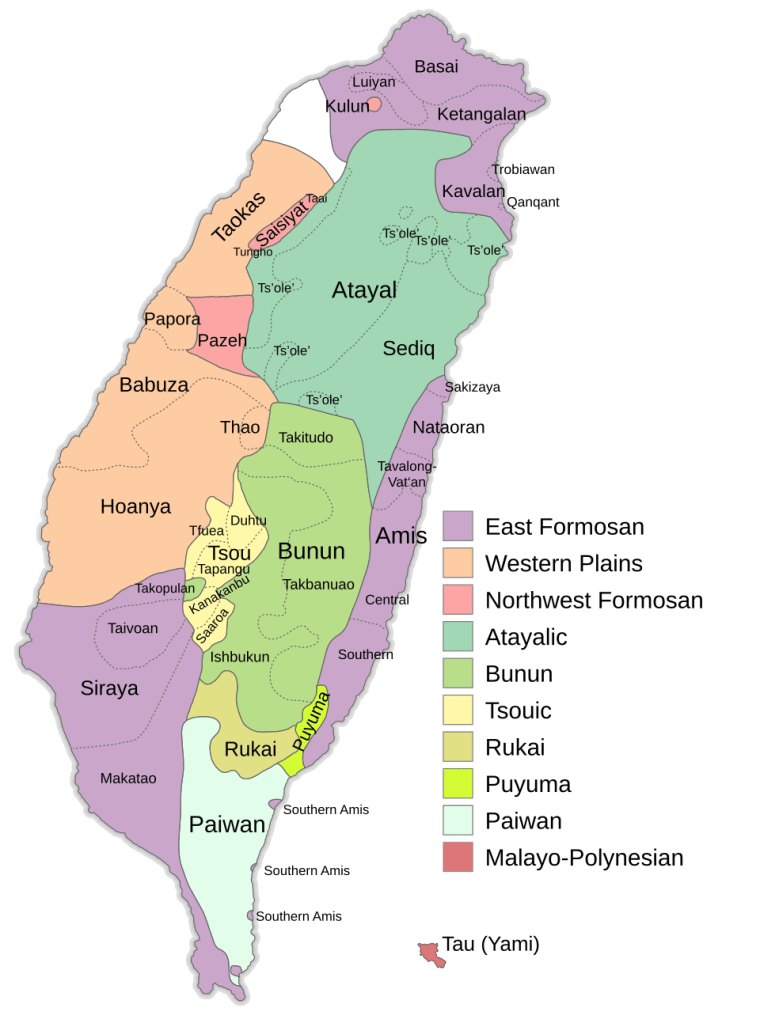
prior to colonization by the Chinese
in the 1600’s
( wikipedia.org )

INDIGENOUS LANGUAGE
in the HOUSEHOLD – 2010
( wikipedia.org )

STATUTORY REGIONAL LANGUAGE
( “HAKKA BASIC ACT” )
( wikipedia.org )
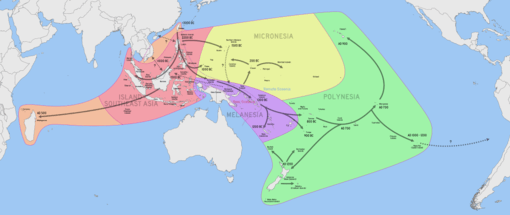
The languages of the “Austronesian People” show common links
stretching from Taiwan to Africa & to the eastern Pacific
( wikipedia.org )
- Languages of Taiwan – 台灣文化中語言的角色
- Taiwan is very rich in language diversity & linguistic heritage. Several language families & layers of history coexist on the Island of Taiwan & reflect the legacy of migration of people groups to the island as well as the heritage of indigenous peoples.
- Languages spoken on the Island of Taiwan include: (i.) Indigenous Austronesian languages (the island’s original languages); (ii.) Mandarin Chinese which is the official language & dominant language spoken on the Island of Taiwan; (iii.) Taiwanese Hokkien which is a widely-spoken community language); (iv.) Hakka which is an important & significant minority language; (v.) Taiwan Sign Language; and (vi.) Minority & Immigrant Languages: English is widely taught as a foreign language. Japanese is spoken by some older Taiwanese & studied in institutes of higher education for cultural & historical reasons. Several southeast Asian languages are present on the Island of Taiwan due to immigration & marriage migration: Vietnamese, Indonesian, Thai, & Filipino Tagalog. Cantonese is spoken among some residents who are descended from families in southern China.
- Taiwan officially recognizes all portions of its multilingual heritage: (i.) Indigenous languages, Hakka & Taiwanese Hokkien are designated “national languages” alongside Mandarin; (ii.) Schools, broadcasting, public signage & legal settings increasingly allow or encourage their use; (ii.) Churches, especially among Indigenous peoples, play an important role in language preservation.
- wikipedia.org – Languages of Taiwan – 臺灣語言列表 @ Wikipedia . org
- wikipedia.org – Formosan languages – 台灣南島語 @ Wikpedia . org
- taiwanobsessed.com – Taiwanese Language: History, Examples, and More @ Nick Kembel’s “Taiwan Obsessed” website (terrific site !!!)
- brill.com – Taiwan & the Formosan Languages @ Brill . com
- cmn-hant.overseas.ncnu.edu.tw – Languages Spoken in Taiwan @ University Entrance Committee For Overseas Compatriot Students website
- daytranslations.com – Languages of Taiwan @ Day Translations blog
- eliteasia.co – What Are the Most Spoken Languages in Taiwan? @ Elite Asia – transcription … translation … linguistic services (Singapore)
- ethnologue.com – Languages spoken in Taiwan @ Ethnologue . com – website
- getblend.com – Languages Spoken in Taiwan @ BLEND (formerly “One Hour Translation, Inc.) website
- joshuaproject.net – Languages spoken in Taiwan @ The Joshua Project website
- kwansei.ac.jp – The politics of names of languages in Taiwan @ Kwansei Gakuin University (Hyogo, Japan) – School of Policy Studies
- lifeoftaiwan.com – People & Languages of Taiwan @ Life of Taiwan . com
- milestoneloc.com – What Are The Languages Spoken In Taiwan? @ Milestone Localization Private Limited & Milestone Localization (UK) Limited (Linguistics Services)
- omniglot.com – Online encyclopedia of writing systems & languages @ Omniglot . com
- onehourtranslation.com – Languages of Taiwan @ one hour translation . com
- researchgate.net – Taiwan’s linguistic identify @ University of Milan BicoccaI – Thesis (in Italian)
- taiwanese-secrets.com – What languages do people speak in Taiwan? @ Taiwanese Secrets blog
- CHINESE ROMANIZATION used on TAIWAN
- wikipedia.org – Romanization of Chinese Language used on Taiwan @ Wikipedia . org
- wikipedia.org – Wade-Giles Romanization of Mandarin Chinese @ Wikipedia . org
- The CloudBridge Project – 雲橋語文計劃 – 臺灣
- The CloudBridge Project maintains a “web library” and a series of “Home Pages” with useful links for the culture & language of the principal People Groups presently inhabiting the Island of Taiwan. These are presented below.
- Mandarin Chinese – (國語 / 普通話) is the Official National Language of the Government of the Republic of China on the Island of Taiwan. Mandarin is the dominant language of government, education, media & business. It was introduced as the primary official language after 1945 & strongly promoted after 1949. Nearly all people living today in the Island of Taiwan, with the exception of foreign workers are have recently arrived, are fluent in Mandarin. In the People’s Republic of China on the Mainland, the “simplified script” of the written Chinese language is used. But Taiwan usage of “Traditional” Chinese characters in written language is aligned with Singapore, Hong Kong and Macau.
- Hakka 客家話 – The Hakka language is spoken by the Hakka people, who form a significant minority on the Island of Taiwan. Hakka is distinct from Mandarin. The Hakka language is a branch of the Sinitic (Chinese) language family, but it is distinct from Mandarin. In Taiwan, the most common variety spoken is Sixian Hakka, though several dialects exist. Hakka is not mutually intelligible with either Mandarin or Southern Min (Hokkien).
- Taiwanese HokkienTaiwanese Hokkien (台語 / 閩南語) – is a Sinitic Language of the Southern Min branch. It is a widely spoken vernacular language on the Island of Taiwan, and is often called “Taiwanese”, “Taiwanese Southern Min”, or “Hoklo”. The language was historically brought by migrants from Fujian (福建) on the Chinese Mainland starting in the 17th century. Hokkien or “Hokklo” is common in daily conversation, folk culture, traditional music & local media. It is not mutually intelligible with Mandarin, despite both being languages of the “Chinese” family tree.
- wikipedia.org – Taiwanese Hokkien @ Wikipedia . org
- Taiwan Sign Language (TSL) is a fully-developed natural sign language. It is distinct from Chinese Sign Language. It is commonly used by the community of hearing-impaired persons on the Island of Taiwan.
- Indigenous Austronesian languages
- (The “original” languages of the Island of Taiwan)
The languages of the “Austronesian People” show common links
stretching from Taiwan to Africa & to the eastern Pacific
( wikipedia.org )
- Indigenous (Formosan) Languages are part of the Austronesian Language Family. These languages are indigenous to the Island of Taiwan & are among the oldest languages on the island. These languages are not part of the Chinese Language Family & are not related to the Mandarin, Hokkien or Hakka languages.
- Linguistically, Taiwan’s Indigenous languages are extremely important because they preserve ancient features of the root Austronesian Language. Taiwan is the homeland of the Austronesian Language Family & the indigenous languages have spread widely from the Island of Taiwan across the Pacific & Indian Oceans to Polynesia, Micronesia, Madagascar, & Southeast Asia. There are 16 “officially recognized” Indigenous People Groups on the Island of Taiwan and each group has its own language or distinct language variety which belongs to the family of Austronesian Languages. Most of the Indigenous languages on the Island of Taiwan are endangered & forts to revitalize them are ongoing through programs involving education, media, church worship & community cultural outreach.
- Indigenous Peoples of Taiwan – 臺灣原住民族 – The CloudBridge Project maintains a Home Page with useful links for the culture & language of the Indigenous Peoples on the Island of Taiwan. Our website also maintains Home Pages for each of the languages of the Indigenous People Groups.
- Amis – 阿美語言 – The language of the Amis People (阿美族). There are five dialects: Southern Amis, Tavalong-Vataan, Central Amis, Chengkung-Kwangshan, and Northern Amis (Nanshi Amis, which includes Nataoran).
- Arikun – 阿立昆語言 – The language of the Arikun People ( 阿立昆 ) is an extinct Western Plains Formosan language that belongs to the Austronesian language family. The Arikun People were indigenous to the western coastal plains & central foothills of the Island of Taiwan. They are historically grouped as part of the “Hoanya” People Group. Because their language went extinct before extensive modern linguistic records were made, Arikun remains mostly unclassified beyond its broader linguistic family & is only preserved in limited historical wordlists.
- Atayal – 泰雅語 – The language of the Atayal People (泰雅族) is called “Tayal” or“Tay” and is an Austronesian language spoken by the indigenous people in the mountainous regions of northern & central Taiwan, in areas in New Taipei, Taoyuan, Hsinchu, Miaoli, Taichung, Nantou & Yilan. In parts of Yilan County, a unique Japanese creole has developed & is known as “Yilan Creole”, which is distinct from the traditional Atayal language. While over 90,000 Atayal live in Taiwan, the language is categorized as “Vulnerable” by UNESCO with only about 35,000 fluent speakers who are found primarily among older generations.
- The language of the Paiwan People (排灣) – For useful links to the culture & language spoken by the Paiwan People, click here for the CloudBridge Page for the Paiwan People of Taiwan: Paiwan – 排灣
- Bunun
- Puyuma
- Rukai
- Tsou
- Saisiyat
- Yami (Tao) – spoken on Orchid Island
- Truku, Seediq &Sakizaya (recognized more recently).
- https://multilingual.mofa.gov.tw/web/web_UTF-8/MOFA/glance2021-2022/2021-2022%20Taiwan%20at%20a%20Glance%20%28English%29.pdf?utm_source=chatgpt.com
- https://ntlgportal.moc.gov.tw/?utm_source=chatgpt.com
- https://mhi.moe.edu.tw/
- https://www.ey.gov.tw/state/99B2E89521FC31E1/691a8eae-8e47-444c-8cde-250931aed459?utm_source=chatgpt.com
- https://english.ey.gov.tw/News3/9E5540D592A5FECD/0ce73bb5-0330-4491-9fdb-9eb06f7114d3?utm_source=chatgpt.com
- https://tfps.chc.edu.tw/contents/44/show?utm_source=chatgpt.com
- https://channelplus.ner.gov.tw/channel-language/85?utm_source=chatgpt.com
- https://www.britannica.com/place/Taiwan/Languages?utm_source=chatgpt.com
- https://twlangsurvey.github.io/?utm_source=chatgpt.com
- lonelyplanet.com – Languages spoken in Taiwan @ Lonely Planet – website
- wikipedia.org – Formosan languages – 台灣南島語 @ Wikpedia . org
- wikipedia.org – Tongyong Pinyin – 通用拼音 @ Wikipedia . org (“Tongyong Pinyin” was the official romanization of Mandarin in Taiwan from 2002 – 2008. After January 2009 the Ministry of Education began promoting “Hanyu Pinyin” but local governments were not able to get financial aid from the central government for the conversions. “Tongyong Pinyin” has continued in use for the transliteration into the “ABC alphabet” of some place names & personal names in Taiwan. Many visitors to Taiwan will encounter “Tonyong Pinyin” on the signs in bus stations & subways.)
- wikipedia.org – Hanyu Pinyin – 拼音 @ Wikipedia . org (The term “Pinyin” – 拼音 – translates as “spelled sounds”).
- wikipedia.org – Hokkien spoken on Taiwan
- languagelog.ldc.upenn.edu
- mgt.org.tw -Mandarin-on-the-go-in-Taiwan @ Office of Global Mandarin Education – Taiwan Ministry of Education
- ogme.edu.tw – Learn Chinese in Taiwan @ Office of Global Mandarin Education, Taiwan Ministry of Education – website
- roc-taiwan.org – List of Chinese Language Centers in Taiwan @ Ministry of Foreign Affairs, Republic of China (Taiwan) – website
- HAKKA LANGUAGE
- wikipedia.org – Hakka Chinese @ wikipedia . org
- wikipedia.org – Taiwanese Hakka @ wikipedia . org
- taiwannews.com.tw – Hakka as official Taiwan language @ Taiwan News . com
- taipeitimes.com – Hakka as official Taiwan language @ Taipei Times
- upenn.edu – Hakka as official Taiwan language @ “Language Log” of the Univ. of Pennsylvania Linguistic Data Consortium
- quora.com – Hakka as official Taiwan language @ Quora . com
- focustaiwan.tw – Hakka as official Taiwan language @ Focus Taiwan News Channel
- factsanddetails.com – Hakka language & culture @ Facts & Details . com
- languagehat.com – Hakka as official Taiwan language @ Language hat . com
- straitstimes.com – Hakka on Taiwan @ Straits Times of Singapore
- wikitravel.org – Hakka phrasebook @ wikitravel . org
- omniglot.com – useful Hakka phrases @ omniglot . com
- yomiuri.co.jp – Hakka on Taiwan @ Yomiuri Shinbun (Japan)
- EASY SEARCH FOR MORE LINKS ! . . . . .
- scholar.google.com – Languages in the culture of Taiwan – 台灣文化中語言的角色 @ Google Scholar
- youtube.com – Languages in the culture of Taiwan – 台灣文化中語言的角色 @ YouTube . com
- images.google.com – Languages in the culture of Taiwan – 台灣文化中語言的角色 @ Google Images
* * * * *
PEOPLES – 族 群

( wikipedia.org )
- People Groups in Taiwan – 台灣文化中族群的角色
- The society & culture of modern Taiwan is shaped by the interaction of several people groups. Many people in Taiwan today wish to identify simply as “Taiwanese”, but at the same time they continue to honor their ancestral & cultural backgrounds. The mixed culture derives from various sources of heritage, including: (i.) the deep historical roots of the Indigenous People Groups who have inhabitated the Island of Taiwan for thousands of years; (ii.) the traditions of language, religion & customs of the Han Chinese people who have settled on the Island of Taiwan more recently over the past few centuries; and (iii.) recent immigrants & new residents of other People Groups in Southeast Asia & from other continents.
- taiwan.gov.tw – People of Taiwan @ Government Portal of the Republic of China on Taiwan
- taipeitimes.com – Most Hoklo, Hakka have Aboriginal genes, study finds @ Taipei Times website
- lifeoftaiwan.com – People & Languages of Taiwan @ Life of Taiwan website
- immigration.gov.tw – “ROC’s Initial Report under the International Convention on the Elimination of All Forms of Racial Discrimination & Taiwan United Religions Organization Parallel Report” @ Ministry of the Interior, National Immigration Agency of the Government of the Republic of China on Taiwan
- unpo.org – Taiwan @ Unrepresented Nations & Peoples Organization
- islandfolklore.com – Taiwan’s Cultures and Communities @ Island Folklore . com
- taipeitimes.com – The true identity of Taiwanese @ Taipei Times website
- culturalatlas.sbs.com.au – Population statistics for Taiwan @ Mosaica’s Cultural Atlas (Australia)
- wikipedia.org – Demographics of Taiwan @ Wikipedia . org
- wikipedia.org – Taiwanese People @ Wikipedia . org
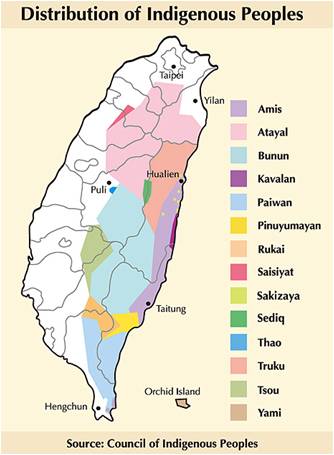
- Indigenous Peoples of Taiwan (原住民族) are the island’s original inhabitants, with histories stretching back thousands of years. Together, Indigenous peoples make up about 2–3% of Taiwan’s population. They belong mainly to the family of speakers of the Austronesian Language Group, linking them culturally and linguistically to peoples across the Pacific. Many groups of the Indigenous Peoples are concentrated in lands along the eastern fringe Taiwan, in the central mountains & in the southern counties. The Indigenous Peoples of the Island of Taiwan have distinct languages, rituals, kinship systems &traditional territories. They have strong ties to their lands, to ancestral spirits & to their individual cultures that are reinforced by seasonal ceremonies.
- wikipedia.org – Taiwan Indigenous Peoples – 臺灣原住民族 @ Wikipedia . org (Chinese)
- wikipedia.org @ Taiwanese Indigenous Peoples @ Wikipedia . org (English)
- cip.gov.tw – The Council of Indigenous Peoples website
- youtube.com – Taiwan Indigenous Peoples Introduction
- knowledge.gov.taipei – The Sixteen Clans of Indigenous Peoples @ Taipei City Government Indigenous Peoples Affairs Commission website
- iwgia.org – The Indigenous Peoples of Taiwan 2023 @ IWGIA – International Work Group for Indigenous Affairs (a global human rights organisation dedicated to promoting & defending Indigenous Peoples’ rights)
- iwgia.org – Indigenous Peoples in Taiwan @ IWGIA – International Work Group for Indigenous Affairs (a global human rights organisation dedicated to promoting & defending Indigenous Peoples’ rights)
- hl.gov.tw – Introduction to the Tribes @ Indigenous Peoples Department of Hualien County website
- The Sixteen “officially recognized” Indigenous People Groups
- At the present time, there are sixteen Indigenous Groups that are “officially recognized” by the Government of the Republic of China on the Island of Taiwan. To learn more about the term “officially recognized”, click here for the CloudBridge Page for the Indigenous Peoples of Taiwan: 臺灣原住民族
- The Amis People (阿美族) – Click here for the CloudBridge Page for the Amis People of Taiwan: Amis – 阿美族
- The Atayal People (泰雅族) – Click here for the CloudBridge Page for the Atayal People of Taiwan: Atayal – 泰雅族
- The Bunun People (布農族) – Click here for the CloudBridge Page for the Bunun People of Taiwan: Bunun – 布農族
- The Hla’alua People – 拉阿魯哇族 – Click here for the CloudBridge Page for the Hla’alua People of Taiwan : Hla’alua – 拉阿魯哇族
- The Kanakanavu People (卡那卡那富族) – Click here for the CloudBridge Page for the Kanakanavu People of Taiwan: Kanakanavu – 卡那卡那富族
- The Kavalan People (噶瑪蘭族) – Click here for the CloudBridge Page for the Kavalan People of Taiwan: Kavalan People – 噶瑪蘭族
- The Paiwan People (排灣) – Click here for the CloudBridge Page for the Paiwan People of Taiwan: Paiwan – 排灣
- The Puyuma (Pinuyumayan) People (卑南族) – Click here for the CloudBridge Page for the Puyuma People of Taiwan: Puyuma (Pinuyumayan) – 卑南族
- The Rukai People (魯凱族) – Click here for the CloudBridge Page for the Rukai People of Taiwan: Rukai – 魯凱族
- The Saisiyat People (賽夏族) – Click here for the CloudBridge Page for the Saisiyat People of Taiwan: Saisiyat – 賽夏族
- The Sakizaya People (撒奇萊雅族) – Click here for the CloudBridge Page for the Sakizaya People of Taiwan: Sakizaya – 撒奇萊雅族
- The Sediq People (賽德克族) – Click here for the CloudBridge Page for the Sediq People of Taiwan: Sediq – 賽德克族
- The Truku (Taroko) People (太魯閣族) – Click here for the CloudBridge Page for the Truku (Taroko) People of Taiwan: Truku (Taroko) – 太魯閣族
- The Thao People (邵族) – Click here for the CloudBridge Page for the Thao People of Taiwan: Thao – 邵族
- The Tsou People (鄒族) – Click here for the CloudBridge Page for the Tsou (Cou) People of Taiwan: Tsou – 鄒族
- The Yami (Tao) People (雅美族) – Click here for the CloudBridge Page for the Yami (Tao) People of Taiwan: Yami (Tao) – 雅美族
- In addition to the 16 recognized groups, there are several Indigenous People Groups who are seeking national recognition:
- Arikun People (阿立昆)
- The Babuza People (巴布薩族)
- Hoanya (洪雅)
- The Kaxabu (or Kahabu) People (噶哈巫族)
- Ketagalan (凱達格蘭
- The Lloa People (羅亞族 or 魯羅阿族)
- The Makatao PEople (平埔族; also 山脚人 or 馬卡道)
- Papora (拍瀑拉)
- Pazeh (巴則海)
- Siraya (西拉雅)
- The Taivoan People ( 大武壠族) – Click here for the CloudBridge Page for the Taivoan People of Taiwan: Taivoan – 大武壠族
- The Taokas People (道卡斯)
- Han Taiwanese are people of full or partial ethnic Han ancestry who live on the Island of Taiwan. They are also known as “Taiwanese Han” (臺灣漢人), “Taiwanese Han Chinese”, or “Han Chinese Taiwanese”. fAccording to the Executive Yuan of Taiwan, they comprise 95 to 97 percent of the population on the Island of Taiwan. The population of Taiwan also includes people of Austronesian heritage & other non-Han people.
- Major waves of Han immigration from the adjoining Chinese Mainland to the Island of Taiwan started in the 17th century. There was a recent wave at the end of Chinese Civil War in 1949. Han Taiwanese on the Island of Taiwan mainly speak three languages: Mandarin, Hokkien & Hakka.
- There is no simple uniform definition of Han Taiwanese. To determine if a Taiwanese is Han, common criteria include: (i.) immigration background (from continental East Asia); (ii.) speaking a Chinese language as their mother tongue; and (iii.) observance of traditional Han festivals. Sometimes a negative definition is employed, where Han people are those who are “not non-Han”.”
- Taiwanese Han ethnic groups include the Hoklo people and Hakka people that had arrived in Taiwan before World War II (sometimes called “benshengren”), as well those and other Han people that arrived shortly after World War II (sometimes called “waishengren”). The distinction between “benshengren” and “waishengren” is now less important due to intermarriages and the rise of a Taiwanese identity. In addition, there are Han that do not fall into the above categories, including the Puxian-speaking people in Kinmen County, the Mindong-speaking people on the Island of Matsu, and various newly arrived immigrants of ethnic Han heritage.
- Those who trace their ancestry to Quanzhou and Zhangzhou from Fujian make up 70% of Taiwan’s population. 15% originate from Longyan and Meixian from Fujian and Guangdong respectively whilst 12% come from other provinces from mainland China. The rest are either Taiwanese aborigines, ethnic minorities from mainland China or foreign spouses.
- wikipedia.org – Taiwanese people (臺灣人) @ Wikipedia . org
- wikipedia.org – Han Taiwanese (臺灣漢人) @ Wikipedia . org
- wikipedia.org – Han Chinese (漢人; 汉人) @ Wikipedia . org
- wikipedia.org – Executive Yuan (行政院) @ Wikipedia . org
- wikipedia.org – Republic of China (中華民國) @ Wikipedia . org
- wikipedia.org – Austronesian people (南岛民族) @ Wikipedia . org
- wikipedia.org – Chinese Civil War (國共內戰) @ Wikipedia . org
- wikipedia.org – Taiwanese Mandarin (臺灣國語) @ Wikipedia . org
- wikipedia.org – Taiwanese Hokkien (臺灣閩南語) @ Wikipedia . org
- wikipedia.org – Taiwanese Hakka (臺灣客家語 / 臺灣客話) @ Wikipedia . org
- wikipedia.org – Demographics of Taiwan (臺灣人口) @ Wikipedia . org
- wikipedia.org – Chinese language ( 漢語, 中文, 漢文 ) @ Wikipedia . org
- wikipedia.org – List of observances set by the Chinese calendar (漢族傳統節日) @ Wikipedia . org
- wikipedia.org – Hoklo people (福佬人) @ Wikipedia . org
- wikipedia.org – Hakka people (客家人) @ Wikipedia . org
- wikipedia.org – Benshengren (本省人) @ Wikipedia . org
- wikipedia.org – Waishengren (臺灣外省人) @ Wikipedia . org
- wikipedia.org – Taiwanese people (臺灣人) @ Wikipedia . org
- wikipedia.org – Pu–Xian Min (莆仙話) @ Wikipedia . org
- wikipedia.org – Eastern Min (閩東語) @ Wikipedia . org
- wikipedia.org – Quanzhou (泉州市) @ Wikipedia . org
- wikipedia.org – Zhangzhou (漳州市) @ Wikipedia . org
- wikipedia.org – Fujian (福建) @ Wikipedia . org
- wikipedia.org – Longyan (龙岩市) @ Wikipedia . org
- wikipedia.org – Meixian (Meizhou, 梅县区) @ Wikipedia . org
- wikipedia.org – Guangdong (廣東 · 广东) @ Wikipedia . org
- The population of Han Chinese on the Island of Taiwan is contained within distinct subgroups the have different migration histories & cultural traits: (i.) the Hoklo People (福佬人); (ii.) the Hakka People (客家); and (iii.) Waishengren (外省人).
- The Hoklo people (福佬人) are a Han Chinese sub-ethnic group who speak Hokkien, a Southern Min language, or trace their ancestry to southeastern Fujian Province on the Chinese Mainland to the west of Taiwan. They are known by various related terms such as “Banlam People” (閩南人), “Minnan People”, “Fujianese People” or more commonly in Southeast Asia as the Hokkien People (福建人). The Hokkien People have a distinct culture and they exert a strong influence on food, folk religion & daily life on the Island of Taiwan, particularly in the urban areas. Hokkien shrines & temples have a distinctive architecure with tilted sharp eaves, high and slanted top roofs & finely detailed decorative inlays of wood and porcelain. The Hokkien language, which includes Taiwanese Hokkien, is the mainstream Southern Min, which is partially mutually intelligible to other Southern Min varieties such as Teochew, Zhongshan, Haklau, and Zhenan.
- The Hakka (客家) are also referred to as “Hakka Chinese” or “Hakka-speaking Chinese”. Hakka People (客家) comprise around 15% of the population of the Island of Taiwan. The Hakka People of Taiwan are known for their history of migration & cultural resilience. Unlike other Han Chinese people groups, the Hakkas are not named after a geographical region, a province, county or city. The Chinese characters for Hakka (客家) literally mean “guest families”. They speak the Hakka language and have distinct customs, architecture & cuisine. Hakka People on the Island of Taiwan are concentrated in Taoyuan, Hsinchu & Miaoli Counties, and in parts of southern Taiwan.
- hakka.gov.tw
- chakcg.kcg.gov.tw – Council for Hakka Affairs of The Kaohsiung City Government
- hakka.gov.tw
- hakka.gov.tw – Hakka Diversity in Taiwan
- hakka.gov.tw
- hakka.gov.tw
- Waishengren (外省人) are the descendants of people who arrived from the Chinese Mainland after 1945 and especially around 1949 at the time of the Communist Revolution on the Chinese Mainland. The Waishengren Families came from many regions across China. They have been historically influential in politics, military & education on the Island of Taiwan since 1949.
- wikipedia.org – Waishengren @ Wikipedia . org
- Recent Immigrants & New Residents
- In the last few decades, the Island of Taiwan has become more multicultural due to the recent immigration of other People Groups from Southeast Asia. Immigrants from Vietnam, Indonesia, Thailand & the Philippines, have arrived to work in manufacturing, fishing & as caregivers to the elderly & handicapped. Their languages & cultures are increasingly visible in Taiwanese society. There are also smaller populations from Japan, Korea, Europe & North America, principally among the growing numbers of international students & professionals.
- wikipedia.org – Taiwanese people – 臺灣人 @ Wikipedia . org
- britannica.com – Taiwan ethnic groups @ Britannica . com
- joshuaproject.net – People groups in Taiwan @ The Joshua Project website
- culturalsurvival.org – The First Nations of Taiwan: A Special Report on Taiwan’s indigenous peoples @ Cultural Survival website
- museum.org.tw – Shung Ye Museum of Formosan Aborigines @ Museum . org
- guidetotaipei.com – Who are the Taiwanese aboriginals @ Guide to Taipei website
- wikipedia.org – List of indigenous peoples of Taiwan @ Wikipedia . org
- unpo.org – People groups in the culture of Taiwan – backgrounder
- wikipedia.org – People groups in the culture of Taiwan – backgrounder
- wikipedia.org – People groups in the culture of Taiwan – backgrounder
- joshuaproject.net – People groups in the culture of Taiwan – backgrounder
- worldatlas.com – People groups in the culture of Taiwan – backgrounder
- britannica.com – People groups in the culture of Taiwan – backgrounder
- indexmundi.com – People groups in the culture of Taiwan – backgrounder
- nationsencyclopedia.com – People groups in the culture of Taiwan – backgrounder
- study.com – People groups in the culture of Taiwan – backgrounder
- commisceo-global.com – People groups in the culture of Taiwan – backgrounder
- culture.teldap.tw – People groups in the culture of Taiwan – backgrounder
- EASY SEARCH FOR MORE LINKS ! . . . . .
- scholar.google.com – People Groups in the culture of Taiwan – 台灣文化中族群的角色 @ Google Scholar
- youtube.com – People Groups in the culture of Taiwan – 台灣文化中族群的角色 @ YouTube . com
- images.google.com – People Groups in the culture of Taiwan – 台灣文化中族群的角色 @ Google Images
ETHNIC MINORITIES – 少 數 民 族
- Ethnic Minorities in Taiwan – 台灣文化中少數民族的角色
- unpo.org – Ethnic minorities in the culture of Taiwan @ Unrepresented Nations & Peoples Organization
- taiwanho.com – Understanding Taiwan’s ethnic groups @ Taiwan Ho website
- medium.com – Yap, Ko-Hua, 2024, “Unraveling the Historical Puzzles of Taiwan’s Ethnic Groups” (臺灣族群史解謎). Taipei: SpringHill Publishing @ Medium . com (the internet portal for human stories & ideas).
- minorityrights.org – Indigenous peoples in Taiwan @ Minority Rights . org
- minorityrights.org – Taiwan @ Minority Rights . org
- study.com – Ethnic minorities in the culture of Taiwan – backgrounder
- japantimes.co.jp – Ethnic minorities in the culture of Taiwan – backgrounder
- nationsencyclopedia.com – Ethnic minorities in the culture of Taiwan – backgrounder
- indexmundi.com – Ethnic minorities in the culture of Taiwan – backgrounder
- sagepub.com – Ethnic minorities in the culture of Taiwan – backgrounder
- worldatlas.com – Ethnic minorities in the culture of Taiwan – backgrounder
- wikipedia.org – Demographics of Taiwan @ Wikipedia . org
- bbc.co.uk – Ethnic minorities in the culture of Taiwan – backgrounder
- wikipedia.org – Taiwanese People @ Wikipedia . org
- miaoli.gov.tw
- taiwan.net.tw
- miaoli.gov.tw
- mlc.gov.tw
- taiwangods.com
- taiwaneverything.cc
- straitstimes.com
- wikitravel.org
- taiwanese-secrets.com
- amoytainan.com
- google.com
- taiwangods.com
- mlc.gov.tw
- wikipedia.org
- wikipedia.org
- wikipedia.org
- wikipedia.org
- EASY SEARCH FOR MORE LINKS ! . . . . .
- scholar.google.com – Ethnic Minorities in the culture of Taiwan – 台灣文化中少數民族的角色 @ Google Scholar
- youtube.com – Ethnic Minorities in the culture of Taiwan – 台灣文化中少數民族的角色 @ YouTube . com
- images.google.com – Ethnic Minorities in the culture of Taiwan – 台灣文化中少數民族的角色 @ Google Images
DEMOGRAPHICS – 人 口 分 布

( tradingeconomics.com )

( wikiwand.com )
( wikiwand.com )
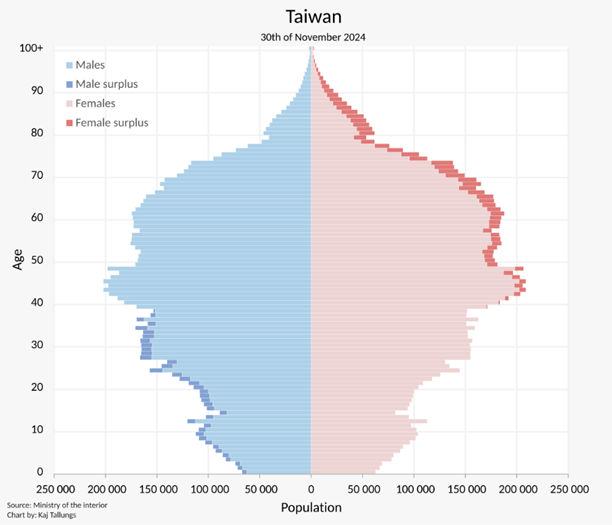
- Demographics of Taiwan – 台灣文化中人口分布的角色
- wikipedia.org – Demographics of Taiwan @ Wikipedia . org
- migrationpolicy.org – Taiwan Demographics @ Migration Policy Institute website
- worldpopulationreview.com – Demographics of Taiwan
- indexmundi.com – Demographics in the culture of Taiwan – backgrounder
- stat.gov.tw – National Statistics of the Republic of China – website
- ey.gov.tw – Geography & demographics of Taiwan @ Executive Yuan website
- wsj.com – Demographics in the culture of Taiwan – backgrounder
- quora.com – Demographics in the culture of Taiwan – backgrounder
- ndc.gov.tw – Population projections for Taiwan @ National Development Council of Taiwan – website
- tradingeconomics.com – Demographics in the culture of Taiwan – backgrounder
- cia.gov – Demographics in the culture of Taiwan – backgrounder
- EASY SEARCH FOR MORE LINKS ! . . . . .
- scholar.google.com – Demographics in the culture of Taiwan – 台灣文化中人口分布的角色 @ Google Scholar
- youtube.com – Demographics in the culture of Taiwan – 台灣文化中人口分布的角色 @ YouTube . com
- images.google.com – Demographics in the culture of Taiwan – 台灣文化中人口分布的角色 @ Google Images
* * * * *
Click here for the Cloudbridge Home Page for Taiwan
Click here for links to Culture for Taiwan
Click here for links to Business for Taiwan
Click here for links to Travel for Taiwan
Click here for links to Nature & Environment of Taiwan
For links to Languages & Peoples of Taiwan . . . . .
. . . . . please scroll up through this page
* * * * *
NOTE : This site contains links to our ”favorite” and “most useful” websites . . . but the CloudBridge Project does not endorse or guarantee any of the products or services available through the links on the pages of this website.
本站包含了我們的 “最愛” 以及 “最有用” 的網站連結,但雲橋語文計劃並不保證其連結的有效性或對其背書.
Welcome to send us an email with your thoughts or comments:
欢迎用电子邮件的方式分享您的意见和建议:
Email: CloudBridgeTaiwan@gmail . com
LATEST PAGE UPDATE: May 18 , 2026
最後一次更新時間為: 2026 / 05 / 18
Copyright ©2021 CloudBridge Project. All rights reserved.
版權所有 ©2021 雲橋語文計劃. 保留所有權利.
 CloudBridgeTaiwan