* * * * *
Click here to return to the CloudBridge Home Page
for Indigenous Peoples of Taiwan
Click here to return to the CloudBridge Home Page
for Language & Peoples of Taiwan
* * * * *
Links to individual topics
for ARIKUN – 阿立昆
are displayed on this page in the following categories :
THE ARIKUN PEOPLE – 阿立昆
The Arikun Language – 阿立昆的語言
* * * * *

( ontheworldmap.com )

Also shown are:
Green Island (Lu Dao) & Orchid Island (Lan Yu).
( cia.gov )

( nouahsark.com )

Alternate spellings or names:
Taroko (Truku, Seediq); Yami (Tao)
( wikipedia . org )

( geology . com )
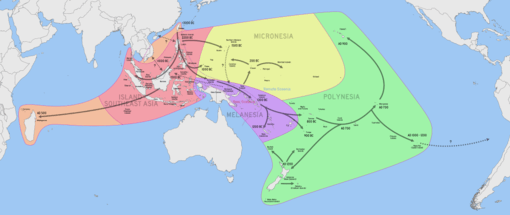
The languages of the “Austronesian People” show common links
stretching from Taiwan to Africa & to the eastern Pacific
( wikipedia.org )
* * * * *
THE ARIKUN PEOPLE – 阿立昆
- The Arikun Indigenous People ( also written “Arikun”, “Arikan”, or “Arikwan” ) historically lived in the fertile plains & foothills of central Taiwan & were active agriculturalists & traders. The traditional territory of the Arikun People lay in parts of today’s Taichung City, Changhua County & western Nantou County. They are classified as part of the “Plains Indigenous” (“Pingpu”) People Group. At the present time, they are not “officially recognized” by the Government of the Republic of China on the Island of Taiwan as a “distinct” Indigenous People, but they are historically & culturally documented to be an authentic indigenous people group on Taiwan.
- During the Dutch colonial period (1624–1662), Arikun villages appear in records kept by the Dutch, and they were often grouped with nearby plains peoples. Over time, the Arikun experienced heavy assimilation pressures, particularly during: (i.) the Qing Dynasty, with the influx & settlement by Han Chinese; and (ii.) the period of Japanese rule (1895–1945), which accelerated their cultural & linguistic decline. By the early 20th century, many Arikun people had been absorbed into Han society, although family lineages & local identities persisted.
- The Arikun language belonged to the Austronesian language family, but it is now considered to be extinct. The Arikun language & culture is often associated with or grouped near the Papora & Babuza peoples. Some historical word lists of the Arikun language survive in colonial documents and in the records kept by the Dutch missionaries.
- Historical sources suggest that Arikun culture & society shared common features with other Pingpu (Plains Peoples) Groups. They maintained a wet-rice and dry-field agriculture. They had a village-based social organization. They held spiritual beliefs of animism, which were later influenced by Christianity and Chinese folk religion. Their society also maintained matrilineal or bilateral kinship patterns, as was common among other Plains Indigenous groups. Their traditional customs faded earlier than those of more-isolated mountain Indigenous peoples due to closer contact with settlers.
- Today, the modern descendants of the Arikun often identify as Pingpu descendants. They are active in local history research, and participate in broader Plains Indigenous recognition movements. The priorities of the Arikkun descendants are to: (i.) reconstruct genealogy; (ii.) preserve historical records; and (iii.) seek cultural acknowledgment which will hopefully lead to legal recognition
- The Arikun are historically linked to other Plains Peoples: Papora, Babuza & Taokas People Groups. In some records, these groups are collectively referred to as part of the Central Plains Indigenous peoples, though each had distinct village identities.
- The Arikun people are an important reminder that: (i.) Taiwan’s Indigenous history extends beyond the currently recognized groups; (ii.) Plains Indigenous cultures played a major role in early Taiwanese history; and (iii.) Cultural disappearance often reflects the circumstances of colonial pressure, not necessarily the actual disappearance of the people.
- wikipedia.org – Arikun people – 阿立昆族 @ Wikipedia . org
- ipcf.org.tw – The mistaken names: Hoanya, Lloa & Arikun @ Indigenous Insight e-zine (published by the Indigenous People Cultural Foundation, Taipei).
- ipcf.org.tw – The Southwest Region of the Island – home to Taiwanese Plains Indigenous People @ Indigenous Insight e-zine (published by the Indigenous People Cultural Foundation, Taipei).
- ipcf.org.tw – The mistaken names: Hoanya, Lloa & Arikun @ Indigenous Insight e-zine (published by the Indigenous People Cultural Foundation, Taipei). (Chinese)
- ipcf.org.tw – The Central Taiwanese Plains People absent from the textbooks @ Indigenous Insight e-zine (published by the Indigenous People Cultural Foundation, Taipei).
- cip.gov.tw – “What Is Pingpu Peoples?” @ Taiwan Council of Indigenous Peoples – 原住民族委員會 (CIP) website – (Executive Yuan of the Government of the Republic of China on the Island of Taiwan)
- cip.gov.tw – Memories of Pingpu Collected: The Image of Kavalan in Museum Artifacts @ Indigenous Peoples Documents e-zine, published by the Taiwan Council of Indigenous Peoples
- cip.gov.tw – “The relationship between Taiwan’s Indigenous Peoples and Austronesian Linguistic Family in the world” @ Taiwan Council of Indigenous Peoples – 原住民族委員會 (CIP) website – (Executive Yuan of the Government of the Republic of China on the Island of Taiwan)
- wixsite.com – The Secrets of Taiwan’s Aboriginal Families: A Comprehensive Collection of Documentary and In-Depth Reports on the History and Culture of the Pingpu Indigenous Peoples @ South Island Dream Hatching e-zine
- wixsite.com – “Alikun or Babusa?: Historical stories of the Pingpu people from “Dawu County She (Shetou)” and “Dahongmao She (Tianzhong)” in Changhua, including “Old She”, “Sheshi”, and “Fan Yuanshuai” @ South Island Dream Hatching e-zine
- taipeitimes.com – Pingpu indigenous people’s act passed by the legislature @ Taipei Times website
- taipeitimes.com – Truku people seek recognition @ Taipei Times website
- foreignpolicy.com – The Inconvenient Truth of Taiwan’s Indigenous Peoples @ Foreign Policy e-zine
- oup.com – The genomic diversity of Taiwanese Austronesian groups: Implications for the “Into- and Out-of-Taiwan” models @ PNAS Nexus (an open access journal which expands on the Proceedings of the National Academy of Sciences)
- iwgia.org – The Indigenous World 2024: Taiwan @ IWGIA – International Work Group for Indigenous Affairs (a global human rights organisation dedicated to promoting & defending Indigenous Peoples’ rights)
- iwgia.org – The Indigenous World 2025: Taiwan @ IWGIA – International Work Group for Indigenous Affairs (a global human rights organisation dedicated to promoting & defending Indigenous Peoples’ rights).
- ipcf.org.tw – Taiwan Indigenous TV & Radio @ Indigenous Peoples Cultural Foundation website
- atayal.org – The Atayal Organization website
- EASY SEARCH FOR MORE LINKS ! . . . . .
- scholar.google.com – The Arikun People – 阿立昆 @ Google Scholar
- youtube.com – The Arikun People – 阿立昆 @ You Tube . com
- images.google.com – The Arikun People – 阿立昆 @ Google Images
The Arikun Language – 阿立昆的語言
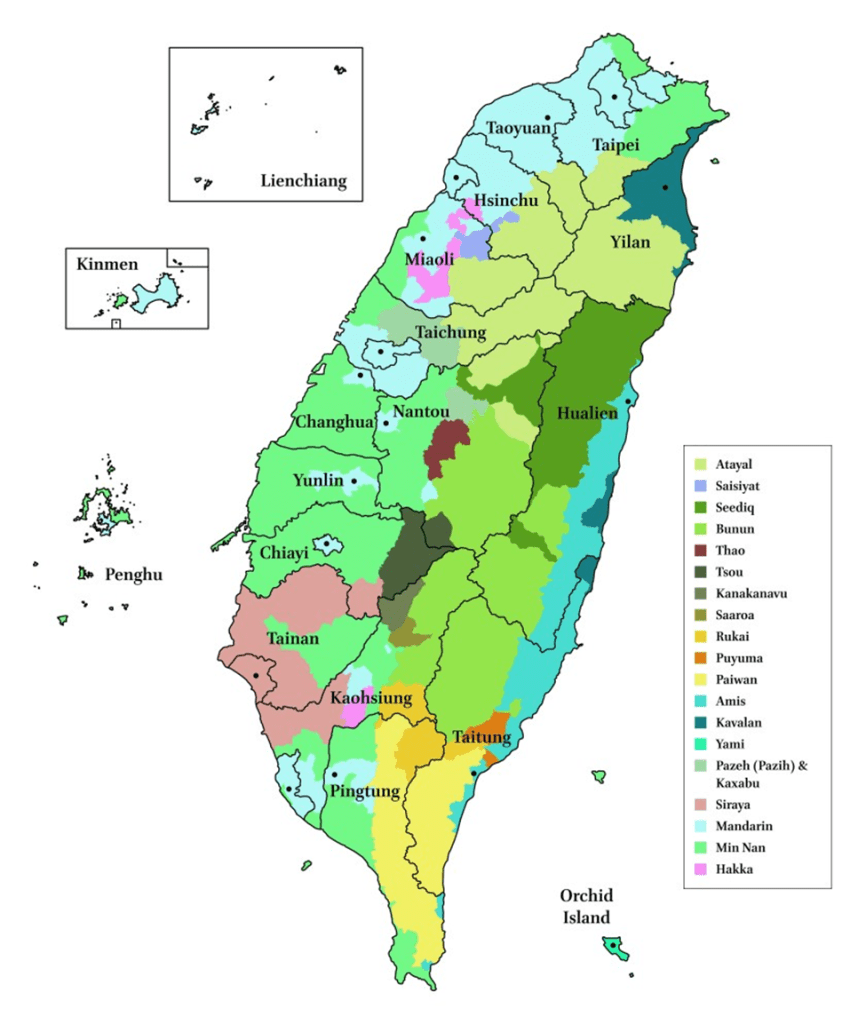
( taiwaninsight.org )
- The Language of the Arikun People – 阿立昆的語言
- The language of the Arikun people is Arikun, an extinct Western Plains Formosan language that belonged to the Austronesian language family. The Arikun people were indigenous to the western coastal plains & central foothills of the Island of Taiwan. They are historically grouped as part of the Hoanya tribe. Because the language went extinct before extensive modern linguistic records were made, Arikun remains mostly unclassified beyond its broader linguistic family & is only preserved in limited historical wordlists.
- britannica.com – Formosan languages @ Encyclopedia Britannica website
- britannica.com – Languages of Taiwan @ Encyclopedia Britannica website
- wikipedia.org – Formosan languages – 台灣南島語 @ Wikipedia . org
- wikipedia.org – The Languages of Taiwan @ Wikipedia . org
- cip.gov.tw – “The relationship between Taiwan’s Indigenous Peoples and Austronesian Linguistic Family in the world” @ Taiwan Council of Indigenous Peoples – 原住民族委員會 (CIP) website – (Executive Yuan of the Government of the Republic of China on the Island of Taiwan)
- minorityrights.org – Indigenous peoples in Taiwan @ Minority Rights . org
- languagelog.ldc.upenn.edu – Indigenous languages of Taiwan @ Language Log (University of Pennsylvania, USA)
- kaiwakiloumoku.ksbe.edu – Indigenous Taiwan @ Kaʻiwakīloumoku Hawaiian Cultural Center (a community gathering space dedicated to Nohona Hawaiʻi, Hawaiian living and learning, part of a Pacific network of indigenous partners committed to the restoration of their Pacific home – Moananuiākea)
- ipcf.org.tw – The Central Plains Taiwanese Indigenous Peoples Absent from the Textbooks @ Indigenous Peoples Cultural Foundation website
- cdway.com.tw – The Forgotten Peoples @ Indigenous Insight e-zine (published by the Indigenous Peoples Cultural Foundation)
- altalang.com – The Languages of Taiwan: Past, Present, and Future @ Alta Language Services website (language solutions designed to elevate global communication)
- islandfolklore.com – The Languages of Taiwan @ Island Folklore . com (an online repository of Taiwan’s folktales, history, legends, myths and traditions)
- iwgia.org – The Indigenous World 2025: Taiwan @ IWGIA – International Work Group for Indigenous Affairs (a global human rights organisation dedicated to promoting & defending Indigenous Peoples’ rights)
- brill.com – “Pingpu Indigenous Groups” @ “Encyclopedia of Taiwan Studies Online”
- kokugakuin.ac.jp – “Preserving Taiwan’s Indigenous Languages and Cultures: A Discussion in Sociolinguistic Perspective” @ Kokugakuin University (formerly: The Imperial Institute for the Study of Classical Japanese Literature) (kokugakuin.ac.jp/)
- oftaiwan.org – “Taiwanese Indigenous People” @ Outreach for Taiwan website (OFT provides information & understanding regarding political atmosphere, current events & historical relevance of Taiwan)
- taiwaninsight.org – “Indigenous Language Policies in Taiwan & Beyond” @ Taiwan Insight (University of Nottingham Taiwan Research Hub “Taiwan Insight” e-zine)
- theconversation.com – “Taiwan’s Indigenous languages are under threat – what can NZ learn from their successes and failures?” @ “The Conversation” (a nonprofit, independent news organization unlocking knowledge of experts for the public good
- theguardian.com – Healing words: Taiwan’s tribes fight to save their disappearing languages @ The Guardian Newspaper website (U.K.)
- taiwaninsight.org – “Introduction to Indigenous Language Policies in Taiwan and Beyond”@ “Taiwan Insight” – the online magazine of the Taiwan Research Hub @ The University of Nottingham (U.K.)
- youtube.com – Revitalizing Taiwan’s Native Languages Through Type @ Youtube . com (ATypi channel)
- daytranslations.com – Languages of Taiwan @ Day Translations (founded on a single conviction: language access is a human right)
- taiwanese-secrets.com – What languages do people speak in Taiwan? @ Taiwanese Secrets . com
- globaltaiwan.org – Saving Tâi-gí: Taiwan’s Largest Heritage Language @ Global Taiwan Institute website (GTI GTI is a nonprofit organization dedicated to inclusive research on policy issues regarding Taiwan & its place in the world)
- getblend.com – Languages Spoken in Taiwan @ Get Blend . com
- nih.gov – “The genomic diversity of Taiwanese Austronesian groups: Implications for the “Into- and Out-of-Taiwan” models” @ PNAS Nexus (An open access journal which expands on the Proceedings of the National Academy of Sciences (PNAS) (oup.com)
- taiwaninsight.org – “Unrecognised Indigenous Groups of Taiwan and their Struggle for Language Revival” @ “Taiwan Insight” – the online magazine of the Taiwan Research Hub @ The University of Nottingham (U.K.)
- EASY SEARCH FOR MORE LINKS ! . . . . .
- scholar.google.com – The Language of the Arikun People – 阿立昆的語言 @ Google Scholar
- youtube.com – The Language of the Arikun People – 阿立昆的語言 @ You Tube . com
- images.google.com – The Language of the Arikun People – 阿立昆的語言 @ Google Images
* * * * *
Click here to return to the CloudBridge Home Page
for the Indigenous Peoples of Taiwan
Click here to return to the CloudBridge Home Page
for Language & Peoples of Taiwan
* * * * *
NOTE : This site contains links to our ”favorite” and “most useful” websites . . . but the CloudBridge Project does not endorse or guarantee any of the products or services available through the links on the pages of this website.
本站包含了我們的 “最愛” 以及 “最有用” 的網站連結,但雲橋語文計劃並不保證其連結的有效性或對其背書.
Welcome to send us an email with your thoughts or comments:
欢迎用电子邮件的方式分享您的意见和建议:
Email: CloudBridgeTaiwan @ gmail . com
LATEST PAGE UPDATE: May 19 , 2026
最後一次更新時間為: 2026 / 05 / 19
Copyright ©2021 CloudBridge Project. All rights reserved.
版權所有 ©2021 雲橋語文計劃. 保留所有權利.
 CloudBridgeTaiwan