* * * * *
Click here to return to the CloudBridge Home Page
for Indigenous Peoples of Taiwan
Click here to return to the CloudBridge Home Page
for Language & Peoples of Taiwan
* * * * *
Links to individual topics
for AMIS – 阿美族
are displayed on this page in the following categories :
THE AMIS PEOPLE – 阿美族
THE AMIS LANGUAGE – 阿美語
* * * * *

( ontheworldmap.com )

Also shown are:
Green Island (Lu Dao) & Orchid Island (Lan Yu).
( cia.gov )

( nouahsark.com )

Alternate spellings or names:
Taroko (Truku, Seediq); Yami (Tao)
( wikipedia . org )

( geology . com )
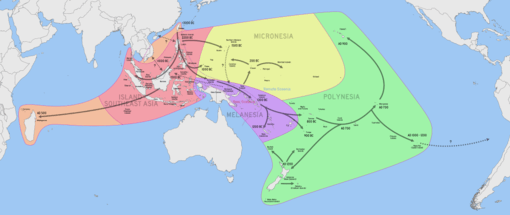
The languages of the “Austronesian People” show common links
stretching from Taiwan to Africa & to the eastern Pacific
( wikipedia.org )
* * * * *
THE AMIS PEOPLE – 阿美族
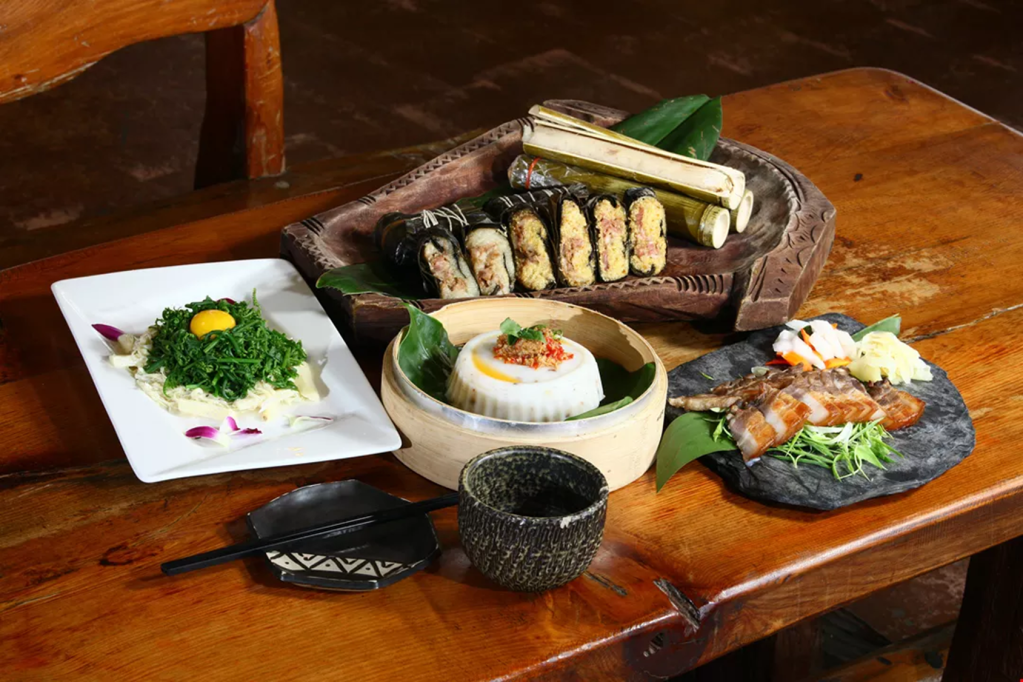
in this variety of tasty dishes prepared
from a robust foraging culture
( taiwan-panorama.com )
- The Amis Indigenous People of Taiwan – 阿美族
- The Amis (阿美族) are the largest Indigenous People Group in Taiwan. The Amis are known for their strong community life, rich ceremonial traditions & close relationship with the land & sea. They are one of Taiwan’s officially-recognized Indigenous People Groups.
- The population of the Amis People is about 210,000–220,000 persons. The group is distributed across four main regions: (i.) Eastern Taiwan, especially along the east coast plains; (ii.) Hualien County; (iiii.) Taitung County; and (iv.) Smaller communities in Pingtung, Kaohsiung & in urban areas, due to migration.
- The Amis People speak their own language – the Amis language – which belongs to the Austronesian language family. The Amis Language is closely related to languages spoken across the Pacific Region. There are several regional dialects. While many elders still speak Amis fluently, younger generations often speak Mandarin Chinese & efforts to revitalize the spoken Amis Language are ongoing.
- The social organization of the Amis People is as a Matrilineal Society. This is one of the most distinctive features of Amis culture. Family lineage is traced through the mother. Property & inheritance traditionally pass through women. After marriage, men often live in the wife’s household. Women play a central role in family continuity & decision-making. Yet, the Amis men traditionally hold public & ceremonial leadership roles, especially in “age-grade” organizations.
- The Amis People are known for their “age-grade” (age-set) system, particularly for men. Boys are grouped into age cohorts. Each cohort has specific responsibilities in the local Amis community. The “age-grade” system governs community protocols towards village defense, ceremonial duties & community labor. The “age-grade” system works to reinforces discipline, cooperation & social identity.
- Traditionally, the beliefs & spiritual life of the Amis People involve the practice of animism, which involves the belief that spirits inhabit nature, ancestors & natural forces. The Amis People practice traditional rituals which are intended to maintain harmony between humans & the spirit world. At the present time, many Amis also practice various forms of Christian faith (Presbyterian, Catholic, others). Thus, the traditional beliefs & rituals are often blended with Christian practices.
- The Ilisin Harvest Festival is the most important Amis cultural celebration. It is held annually, usually between July & September, and is a major event attracting visitors from across Taiwan. The festival celebrates the rice harvest & honors ancestral spirits. Elements of the Ilisin Harvest Festival include: (i.) Singing & dancing in large circles; (ii.) the wearing of traditional clothing & headdresses; (iii.) Community feasts; (iv) the practice of rituals tied to “age-grade” groups.
- The economy & traditional livelihood of the Amis People has historically relied on: (i.) Wet-rice agriculture; (ii.) Fishing, particularly in the coastal communities; and (iii.) Hunting & gathering. In the present day, many Amis work in: (i) Agriculture, fisheries, tourism & cultural industries. Many Amis also work as professionals in urban areas, while maintaining their social ties totheir home villages.
- Music & dance are central to the cultural identity of the Amis People. They are known for powerful choral singing. Traditional dress often includes Bright colors, Beadwork, and ornaments constructed of shells & feathers. Amis performers play a significant role in the current revival of indigenous culture on the Island of Taiwan.
- Like other Indigenous People Groups, the Amis face challenges such as: (i.) Language loss; (ii.) Land rights disputes; (iii.) Decline of population in the tribal areas due to urban migration; & (iv.) Cultural preservation. But there is strong activism, pride & interest among the Amis People in cultural revitalization, education & political participation on the Island of Taiwan.
- cip.gov.tw – The Amis People @ Taiwan Council of Indigenous Peoples – 原住民族委員會 (CIP) website – (Executive Yuan of the Government of the Republic of China on the Island of Taiwan)
- hl.gov.tw – Introduction to the Tribes – Amis @ Hualien Indigenous Peoples Department of Hualien County, Taiwan (English)
- hl.gov.tw – Amis People @ Hualien County Collection of Traditional Culture @ Indigenous Peoples Department of Hualien County (Chinese)
- ji-an.gov.tw – Indigenous Peoples of Ji’an (Hualien County) @ Ji’an Township website (Hualien County)
- amis.org.tw – Amis .org . tw website (Chinese)
- amis.org.tw – Amis ethnic distribution @ Amis . org . tw (Chinese)
- tacp.gov.tw – The Amis People @ Indigenous Peoples Cultural Development Center website
- nmp.gov.tw – The Amis People @ Taiwan National Museum of Prehistory website
- eastcoast-nsa.gov.tw – “Sheltered Between the Mountains & the Sea, the East Coast Preserves Unique Culture of Amis People, Kavalan People & Sakizaya People” @ East Coast National Scenic Area – website
- icmagazine.org – The ‘Amis: Stewards of Taiwan’s Eastern Coast @ ICMagazine e-zine (published by Intercontinental Cry (IC) – volunteer-driven global platform for Indigenous voices & frontline truth-telling)
- travelintaiwan.net – “Amis – The Original Inhabitants of the Island” @ Travel in Taiwan e-zine
- taiwaneverything.cc – “The Original Inhabitants of the Island” @ Taiwan Everything blog
- counteroffensive.news – The women-led indigenous culture of Taiwan’s Amis People @ Counter Offensive News (Ukraine)
- outpostmagazine.com – The Ancient Traditions of Taiwan’s Amis People @ Outpost Travel e-zine
- knowlegde.gov.taipei – The Amis People @ Taiwan Indigenous Peoples Cultural Knowledge Network
- asamnews.com – “Why Taiwan’s Indigenous youth are learning what was taken” @ AsAmNews (Daily news site dedicated to the Asian American & Pacific Islander communities)
- researchgate.net – “Sakizaya or Amis? — A Hidden Ethnic Group in Taiwan?” @ Journal of Asian Culture & History (ACH – ccsenet.org) published by the Canadian Center of Science & Education – CCSE (ccsenet.org)
- historyguild.org – Linguistics locates the beginnings of the Austronesian expansion – with Indigenous seafaring people in eastern Taiwan @ History Guild (A group of history enthusiasts whose mission is historical literacy for all)
- thetaiwanmuseum.com – The Amis @ Taiwan – The Virtual Museum website
- 3people.com.tw – Taiwan Indigenous Culture @ Sanming National Service Center website
- joshuaproject.net – Amis People & Amis Language resources @ The Joshua Project . net (Joshua Project highlights peoples & places with the least access or response to the gospel so the Body of Christ can prioritize its prayer & mission efforts)
- sinica.edu.tw – Transnational Pangcah from Taiwan to South Africa: Home, Church, Ethnic Identity, Adaptation, and Development @ Taiwan Journal of Anthropology
- wikipedia.org – The Amis People ( Pangcah – Muqami – 阿美族) @ Wikipedia . org
- wikipedia.org – Amis Music Festival – 阿米斯音樂節 @ Wikipedia . org
- wikipedia.org – Amis Folk Center – 阿美民俗中心 @ Wikipedia . org
- taiwanobsessed.com – “Meaningful Ways to Experience Indigenous Culture in Taiwan” @ Nick Kembel’s “Taiwan Obsessed” website (Terrirfic site !!!)
- factsanddetails.com – Taiwan’s major aboriginal tribes: Amis, Bunun, Puyuma, Saisiyat, Tsou & Yami @ Facts and Details . com
- iwgia.org – The Indigenous World 2023: Taiwan @ IWGIA – International Work Group for Indigenous Affairs (a global human rights organisation dedicated to promoting & defending Indigenous Peoples’ rights)
- academickids.com – Taiwan Indigenous People groups @ Academic Kids . com
- chloechows.com – Indigenous Tourism in Taiwan: A Day Trip to the Amis Tribe Tafalong Community in Hualien @ Chloe Chow’s blog
- npr.org – Taiwan alters its approach to identity and education of its Indigenous inhabitants @ National Public Radio website (USA)
- EASY SEARCH FOR MORE LINKS ! . . . . .
- scholar.google.com – The Amis People – 阿美族 @ Google Scholar
- youtube.com – The Amis People – 阿美族 @ You Tube . com
- images.google.com – The Amis People – 阿美族 @ Google Images
THE AMIS LANGUAGE – 阿美語
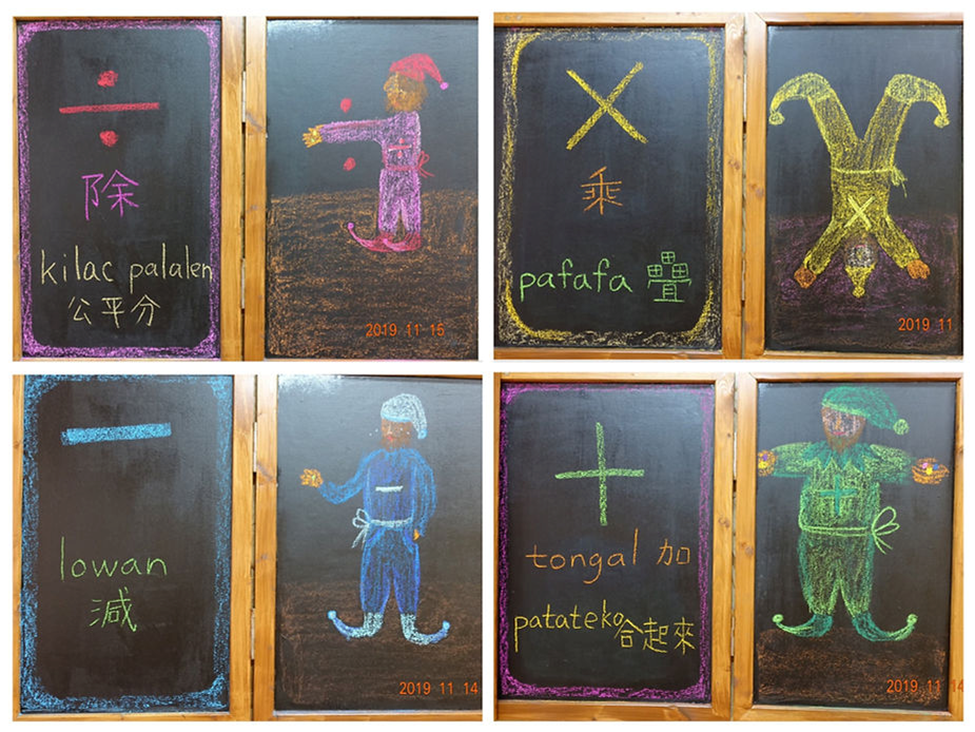
in Makotaay Village by a former public school teacher.
Education at Tamorak School is centered on
indigenous culture & tradition with the native language
used for instruction as a basis for preservation of the culture
( acfi.org )
- The Language of the Amis People of Taiwan – 阿美族的語言
- The Amis language (or Pangcah) is the most widely spoken Formosan language of Taiwan’s indigenous peoples. It belongs to the East Formosan branch of the Austronesian family and is spoken primarily along Taiwan’s eastern coast (in Hualien & Taitung). The language is a “dialect cluster” of at least five distinct, often non-mutually intelligible dialects: Northern Amis (Nanshi), Central Amis (Siwkolan), Coastal Amis (Pasawalian), Farangaw-Maran (Taitung) & Palidaw (Hengchun). The language typically features 17 to 19 consonants & four vowels, often utilizing epiglottal consonants and a schwa sound.
- There are roughly 200,000+ ethnic Amis people on the Island of Taiwan, but the number of fluent speakers of Pangcah is much lower, particularly among persons under the age of 20. UNESCO classifies the language of the Amis People as a “vulnerable or endangered” language.
- In 2017, Formosan languages, including Amis, were made official languages for their respective communities in Taiwan. The government has introduced Romanized writing systems and education programs, supported by Taiwan Indigenous Television & specialized radio stations. Pangcah is frequently used in daily conversation in rural areas, it is broadcast in some public facilities & utilized in popular music to bolster its cultural presence.
- wikipedia.org – The Languages of Taiwan @ Wikipedia . org
- wikipedia.org – Formosan languages – 台灣南島語 @ Wikipedia . org
- wikipedia.org – The Language of the Amis Indigenous People (阿美語 – Amis or Pangcah) @ Wikipedia . org (spoken by estimated one-third of the indigenous population of the Island of Taiwan)
- britannica.com – Formosan languages @ Encyclopedia Britannica website
- britannica.com – Languages of Taiwan @ Encyclopedia Britannica website
- joshuaproject.net – Amis Language Resources @ The Joshua Project (Joshua Project highlights peoples & places with the least access or response to the gospel so the Body of Christ can prioritize its prayer & mission efforts)
- joshuaproject.net – Amis People & Amis Language resources @ The Joshua Project . net (Joshua Project highlights peoples & places with the least access or response to the gospel so the Body of Christ can prioritize its prayer & mission efforts)
- ethnologue.com – Amis Language @ Ethnologue . com (“Ethnologue: Languages of the World” is a comprehensive database on the world’s living languages)
- omniglot.com – Amis (Pangcah) @ Omniglot . com (the online encyclopedia of writing systems & languages)
- omniglot.com – How to count in Amis (Pangcah), a Formosan language spoken in eastern parts of Taiwan @ Omniglot . com (the online encyclopedia of writing systems & languages)
- ilrdf.org.tw – Online Dictionaries of Indigenous Languages @ Indigenous Peoples’ Languages Research & Development Foundation website
- https://taiwantoday.tw – Members of Taiwan’s Amis tribe adopt a teaching method developed by New Zealand’s Maori to help revive their mother tongue @ Taiwan Today e-zine
- britannica.com – Amis language @ Encyclopedia Britannica website
- und.edu – Amis language word lists @ University of North Dakota Scholarly Commons website
- taiwan-panorama.com – Immersion in Amis – Tamorak and Pinanaman Community Schools @ taiwan Panorama e-zine
- thelanguagecloset.com – Languages of Taiwan — Amis (Pangcah) @ The Language Closet website
- wikitongues.org – Safulo Kacaw speaking Amis @ Wikitongues . org
- youtube.com – Austronesian Language Introduction – Amis Tribe – Taiwan @ Youtube . com (Indegnous Bridges channel)
- youtube.com – Amis School Teaches Indigenous Language Through Song @ Youtube . com (TaiwanPlus News channel)
- youtube.com – Formosan: Amis and Pazih @ Youtube . com (I love languages! channel)
- youtube.com – Lets talk about the Amis Language! @ Youtube . com (I love languages! channel)
- youtube.com – Amis Language, People & Culture @ Youtube . com (I love languages! channel)
- youtube.com – The Lost Language of the Amis People @ Youtube . com (Flora L channel)
- gitbook.io – Virginia Fey’s Amis Dictionary @ Formosan Bank website (Dedicated to the preservation & revitalization of the indigenous languages of Taiwan)
- historyguild.org – Linguistics locates the beginnings of the Austronesian expansion – with Indigenous seafaring people in eastern Taiwan @ History Guild (A group of history enthusiasts whose mission is historical literacy for all)
- lifeoftaiwan.com – The Indigenous People @ Life of Taiwan . com
- npr.org – Taiwan alters its approach to identity and education of its Indigenous inhabitants @ National Public Radio website (USA)
- scribd.com – Overview of the Amis Language @ Scribd, Inc. – website (An AI-powered knowledge company
- EASY SEARCH FOR MORE LINKS ! . . . . .
- scholar.google.com – The Language of the Amis People – 阿美族的語言 @ Google Scholar
- youtube.com – The Language of the Amis People – 阿美族的語言 @ You Tube . com
- images.google.com – The Language of the Amis People – 阿美族的語言 @ Google Images
* * * * *
Click here to return to the CloudBridge Home Page
for Taiwanese Indigenous Peoples
Click here to return to the CloudBridge Home Page
for Language & Peoples of Taiwan
* * * * *
NOTE : This site contains links to our ”favorite” and “most useful” websites . . . but the CloudBridge Project does not endorse or guarantee any of the products or services available through the links on the pages of this website.
本站包含了我們的 “最愛” 以及 “最有用” 的網站連結,但雲橋語文計劃並不保證其連結的有效性或對其背書.
Welcome to send us an email with your thoughts or comments:
欢迎用电子邮件的方式分享您的意见和建议:
Email: CloudBridgeTaiwan @ gmail . com
LATEST PAGE UPDATE: May 18 , 2026
最後一次更新時間為: 2026 / 05 / 18
Copyright ©2021 CloudBridge Project. All rights reserved.
版權所有 ©2021 雲橋語文計劃. 保留所有權利.
 CloudBridgeTaiwan