* * * * *
Click for the CloudBridge Home Page for Pingtung
Click for links to Culture for Pingtung
Click for links to Business for Pingtung
Click for links to Travel for Pingtung
to Nature & Environment of Pingtung
For links to
Languages & Peoples
of Pingtung . . . . .
. . . . . scroll down
through this page
Click to return to the Home Page
* * * * *
台灣 / 屏東縣
語言 及 人物
* * * * *

( ontheworldmap.com )

& Penghu, Kinmen & Matsu Islands
Also shown are:
Green Island ( Lu Dao ) & Orchid Island ( Lan Yu )
( cia.gov )

( wikipedia.org )
* * * * *
Links to individual topics
for PINGTUNG – LANGUAGE & PEOPLES
are displayed on this page
in the following categories:

Links to culture of languages & peoples in Pingtung County
* * * * *
PINGTUNG
台灣 / 屏東縣
LANGUAGE & PEOPLES
語言 及 人物
* * * * *
LANGUAGE – 語 言

In the HOME – 2010
Blue: Mandarin Green: Hokkien
Hot Pink: Hakka
Burgundy: Austronesian Langauges
( wikipedia.org )

prior to colonization by the Chinese
in the 1600’s
( wikipedia.org )

INDIGENOUS LANGUAGE
in the HOUSEHOLD – 2010
( wikipedia.org )

STATUTORY REGIONAL LANGUAGE
( “HAKKA BASIC ACT” )
( wikipedia.org )
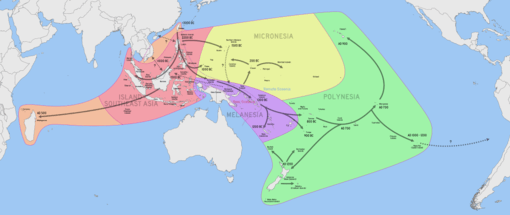
The languages of the “Austronesian People” show common links
stretching from Taiwan to Africa & to the eastern Pacific
( wikipedia.org )
- Languages spoken in Pingtung
- 屏東縣文化中語言的角色
- Pingtung County (屏東縣) is one of the most linguistically diverse areas on the Island of Taiwan due to its mix of Hoklo Han communities, Hakka settlements & a large Indigenous population. As a result of this diverse ethnic mixture, there are several languages spoken in Pingtung: (i.) Mandarin Chinese (國語 / 普通話) is the official & most widely-understood language. It is used in: (a.) Schools (b.) Government offices; (c.) Media; and (d.) Business & tourism. Everyone in Pingtung can communicate in Mandarin, especially younger & working-age people; (ii.) Taiwanese Hokkien (台語 / 閩南語) is the most commonly-spoken home language. It is spoken by the majority of Han residents in Pingtung. It is used in: (a.) Daily conversation (b.) Markets; (c.) Family life; & (d.) Local politics. In the daily life of many rural & older communities, Taiwanese is spoken more than Mandarin; (iii.) Hakka (客家話) is an important regional heritage language. The main geographic areas of Pingtung where it is spoken are the townships of: Neipu (內埔); Wanluan (萬巒); Changzhi (長治); & Zhutian (竹田). Many residents in these townships grow up bilingual in Hakka + Mandarin & they often also understand Taiwanese; (iv.) Indigenous (Formosan) Languages. Pingtung has the largest Indigenous population of any county in Taiwan, especially in its mountain townships. The major Indigenous Languages spoken in Pingtung are: (a.) Paiwan (排灣語) whose usage is the most widespread; (b.) Rukai (魯凱語); & (c.) Amis (阿美語) although the Amis-speaking population in Pingtung is smaller than elsewhere on the east coast of the Island of Taiwan. The principal areas of Pingtung where Indigenous Languages are spoken are in the townships of: Sandimen (三地門); Wutai (霧台); Taiwu (泰武); Chunrih (春日); & Shizi (獅子). The Indigenous Languages are still actively spoken at home by elders & they are taught in schools as heritage languages although Mandarin dominates among younger generations.
- Other Languages (smaller but present . . .) : (i.) English is taught in schools & used in tourism, particularly in Kenting; (ii.) Southeast Asian languages (Vietnamese, Indonesian, Thai) due to the presence in Pingtung of Migrant workers & to International marriages; and (iii.) Japanese, which is understood by some older residents due to the historical influence from the Japanese Occupation of the Island of Taiwan.
- travel.com – Pingtung County: Official & Widely-spoken languages @ Travel.com
- lifeoftaiwan.com – The Indigenous People of Taiwan @ Life of Taiwan website
- getblend.com – Languages spoken in Taiwan @ BLEND
- omniglot.com – Paiwan language & alphabet @ Omniglot On-line encyclopedia of writing systems & languages
- kaiwakiloumoku.ksbe.edu – Indigenous Taiwan @ La’iwakiloumoku Pacific Indigenous Institute
- lingoinn.com – Pingtung Destination Guide @ Lingo Inn . com
Click here for the CloudBridge Home Pages . . . . .
. . . . . for Hakka (客家) People & Language
. . . . . Hoklo (福佬人) People & Language
. . . . . for Paiwan (排灣語) People & Language
. . . . . for Rukai (魯凱語) People & Language
. . . . . for Amis (阿美語) People & Language
- EASY SEARCH FOR MORE LINKS ! . . . . .
- scholar.google.com – Languages in the culture of Pingtung – 屏東縣文化中語言的角色 @ Google Scholar
- youtube.com – Languages in the culture of Pingtung – 屏東縣文化中語言的角色 @ YouTube . com
- images.google.com – Languages in the culture of Pingtung – 屏東縣文化中語言的角色 @ Google Images
PEOPLES – 族 群

Taiwanese aboriginal peoples.
Some groups are not formally recognized
by the central government at the present time
as authentic aboriginal groups,
and some have been “assimilated”
by the ethnic Han Chinese majority.
( wikipedia.org )
- People Groups in Pingtung
- 屏東縣文化中族群的角色
- Pingtung County (屏東縣), at Taiwan’s southern tip, is one of the most ethnically diverse counties on the Island of Taiwan. Its population is made up of four main people groups, each with distinct history, culture & languages: (i.) Hoklo (Minnan / Taiwanese-speaking Han Chinese) are the Largest group in Pingtung. They are the descendants of settlers from Fujian (Quanzhou & Zhangzhou) in southern China who arrived mainly during the Qing Dynasty (17th–19th centuries); (ii.) Hakka (客家人) are the Second-largest Han group. The Hakka migrated to the Island of Taiwan from Guangdong & Fujian on the Mainland later than the Hoklo. They settled mainly in inland plains between mountains and coast; (iii.) Indigenous Peoples (原住民族). Pingtung has the largest population of Indigenous Peoples of any county in Taiwan. The principal Indigenous Groups in Pingtung are: (a) Paiwan (排灣族) – the largest group; (b) Rukai (魯凱族) – concentrated in high mountain areas; (c) Smaller numbers of Amis (阿美族) and others; and (iv.) New Immigrants & Migrant Communities. This is the Fast-growing modern population group composed of (a) Marriage immigrants from: Vietnam Indonesia & Thailand; and (b) Migrant workers in: Fisheries, Caregiving & Manufacturing.
- taiwan-panorama.com – Flights over Formosa – Aboriginal People & Birds @ Taiwan Panorama e-zine
- wikipedia.org – Laiyi Township – 來義鄉 @ Wikipedia . org
- taiwantoday.tw – Hakka – the Invisible Group @ Taiwan Today e-zine
- SANDIMEN TOWNSHIP (三地門鄉)
- Sandimen Township (三地門鄉) is a mountainous indigenous township in northern Pingtung County. It is one of the most important centers of indigenous culture in southern Taiwan, particularly for the Paiwan people. The modern Chinese name “三地門” (Sandimen) is a phonetic translation of an older Paiwan place name. Over time the pronunciation evolved in Taiwanese Hokkien and Mandarin before settling on the current official name.
- Sandimen lies at the northern edge of Pingtung County, where the plains meet the mountains of Taiwan’s Central Mountain Range. It is an area of steep hills, valleys, and river gorges. Sandimen is a township that is primarily composed of Indigenous Peoples. The main groups are: (i) Paiwan (排灣族) – the majority; and (ii) Rukai (魯凱族) – a significant minority. These groups have lived in the region for centuries & maintain strong cultural traditions. Important Paiwan cultural symbols include: (i) Glass beads (琉璃珠) – symbols of status and family heritage; (ii) Bronze knives – traditional tools and symbols of warrior culture; (iii) Pottery and wood carving; (iv) Totem carvings; and (v) slate houses, which are a significant cultural heritage that has been recognized by UNESCO.
- The Sandimen region was originally inhabited by Paiwan tribes, who built slate-stone villages in the mountains. During the Japanese colonial period (1895–1945) Sandimen was administered together with nearby indigenous areas in what was then Takao Prefecture (modern Kaohsiung region). After World War II (post 1945) Taiwan was transferred to the government of the Republic of China & Sandimen became part of the newly created Pingtung County. The township officially adopted the current name Sandimen in 1992.
- wikipedia.org/wiki/Sandimen – Sandimen – 三地門鄉
- foreignersintaiwan.com – Taiwanese Indigenous People’s Cultural Park 台灣原住民族文化園區 @ Foreigners in Taiwan . com blog
- tripadvisor.com – Sandimen – 三地門鄉
- maolin-nsa.gov.tw – Sandimen – 三地門鄉
- taiwaneverything.cc – Sandimen – 三地門鄉
- travelark.org – Sandimen – 三地門鄉
- travelking.com.tw – Sandimen – 三地門鄉
- lifeoftaiwan.com – Sandimen – 三地門鄉
- taiwaneverything.cc – Sandimen – 三地門鄉
- taiwantoday.tw – Sandimen – 三地門鄉
- yeddapalemeq.com – Sandimen – 三地門鄉
- lifeoftaiwan.com – Sandimen – 三地門鄉
Click here for the CloudBridge Home Pages . . . . .
. . . . . for Hakka (客家) People & Language
. . . . . for Paiwan (排灣語) People & Language
. . . . . for Rukai (魯凱語) People & Language
- EASY SEARCH FOR MORE LINKS ! . . . . .
- scholar.google.com – People Groups in the culture of Pingtung – 屏東縣文化中族群的角色 @ Google Scholar
- youtube.com – People Groups in the culture of Pingtung – 屏東縣文化中族群的角色 @ YouTube . com
- images.google.com – People Groups in the culture of Pingtung – 屏東縣文化中族群的角色 @ Google Images
ETHNIC MINORITIES – 少 數 民 族
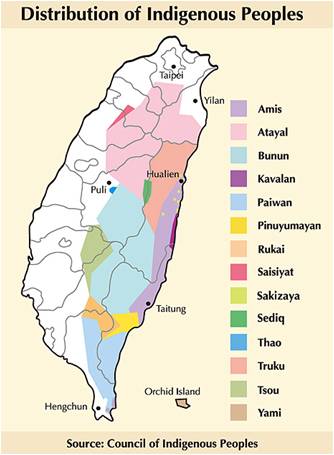
“recognized” Tribes of Indigenous Peoples
on the Island of Taiwan & Orchid Island ( 蘭嶼 )
( cip.gov.gw )
- Ethnic Minorities in Pingtung
- 屏東縣文化中少數民族的角色
- In the context of the Island of Taiwan, the term “ethnic minorities” mainly refers to Indigenous Peoples (原住民族) and in a broader sense also includes new immigrant communities. Pingtung is especially important because it has the largest population of Indigenous People of any county on the Island of Taiwan. Most live in the mountain townships along the Central Mountain Range. Counties throughout Taiwan are dominated by Han populations with small percentages of Indigenous People Groups. Pingtung is different because it has: (i.) Large, continuous territories inhabited by majority Indigenous peoples; (ii.) active tribal governance & cultural preservation in these areas; and (iii.) Strong interaction between the mountain Indigenous Peoples & the Han Chinese (Hoklo People) who live in the western portion of Pingtung on the Coastal Plain. Ethnic minorities in Pingtung interact daily both with the Hoklo people (who are Taiwanese-speaking Han) and with the majority Hakka people who form a large regional Han subgroup. Most Indigenous & new-immigrant residents in Pingtung are multilingual, usually speaking: (a.) their heritage language (Paiwan, Rukai, Vietnamese, etc.); (b.) Mandarin Chinese; and (c.) Taiwanese Hokkien.
- The main Indigenous Groups in Pingtung are: (i.) Paiwan (排灣族). the largest Indigenous Group in Pingtung; (ii.) Rukai (魯凱族) who are a “High-Mountain” People; and (iii.) Amis (阿美族) who are mostly descended from migrants of eastern Taiwan. There are also small numbers of other tribes due to inter-county movement. There are new groups of Immigrant & Migrant Worker Communities (現代族群少數) who are not “ethnic minorities” in the traditional Taiwanese classification, but are a growing importance in Pingtung County: Vietnamese, Indonesian. Thai & Filipino.
- wikipedia.org – Pingtung County (屏東縣) @ Wikipedia . org
- wikipedia.org – Makatao (Tao) people (馬卡道族 ) @ Wikipedia . org
- iwgia.org – The Indigenous World 2024: Taiwan @ IWGIA – International Work Group for Indigenous Affairs – a global human rights organisation dedicated to promoting & defending Indigenous Peoples’ rights
- taiwaneverything.cc – PIngtung Indigenous Villages @ Taiwan Everything blog
- iwgia.org – The Indigenous World 2023: Taiwan @ IWGIA – International Work Group for Indigenous Affairs – a global human rights organisation dedicated to promoting & defending Indigenous Peoples’ rights
- insight.ipcf.org.tw – “The diverse & vivacious Makatao People” @ Indigenous Sight e-zine (published by the Indigenous Peoples Cultural Foundation)
- https://lifeoftaiwan.com
- https://www.taipeitimes.com
- manoa.hawaii.edu – Dance of the Paiwan Aboriginal People of Pingtung County @ University of Hawaii at Manoa
- taiwan-panorama.com – New Immigrants Reshape Pingtung @ Taiwan Panorama e-zine
- wikipedia.org – Sandimen Township (三地門鄉) @ Wikipedia . org
- wangechigitahitravels.com
- justaiwantour.com – “Pingtung Travel Guide 2026: Taiwan’s Tropical South You’ll Wish You Discovered Earlier” @ Just Taiwan Tour
- https://iwgia.org
- https://www.cip.gov.tw
Click here for the CloudBridge Home Pages . . . . .
. . . . . for Amis (阿美族) People & Language
. . . . . for Hakka (客家) People & Language
. . . . . for Hoklo ( 福佬人) People & Language
. . . . . for Paiwan (排灣語) People & Language
. . . . . for Rukai (魯凱語) People & Language
- EASY SEARCH FOR MORE LINKS ! . . . . .
- scholar.google.com – Ethnic Minorities in Pingtung – 屏東縣文化中少數民族的角色 @ Google Scholar
- youtube.com – Ethnic Minorities in Pingtung – 屏東縣文化中少數民族的角色 @ YouTube . com
- images.google.com – Ethnic Minorities in Pingtung – 屏東縣文化中少數民族的角色 @ Google Images
DEMOGRAPHICS – 人 口 分 布

( tradingeconomics.com )

( wikiwand.com )
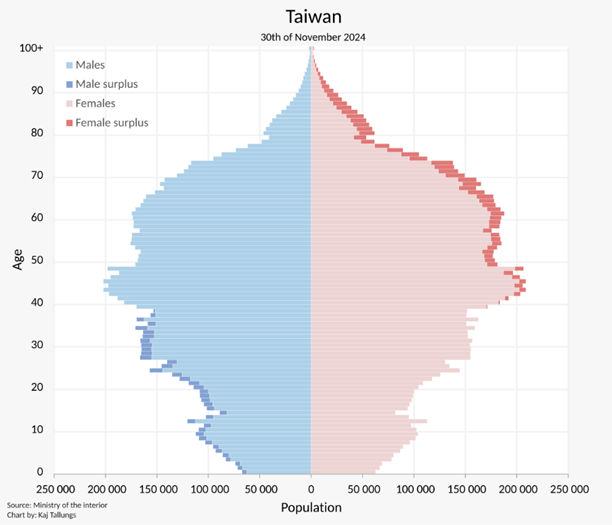
( wikiwand.com )
- Demographics of Pingtung
- 屏東縣文化中人口分布的角色
- Pingtung is one of Taiwan’s larger counties by land area, but not by population. Pingtung’s population is slowly declining. This is a pattern that is common in many rural counties in Taiwan. The population density is low compared with major cities like Kaohsiung or Taichung. The population in Pingtung is more rural & agricultural than urban. The residents are heavily engaged in agriculture & fishing with a generally conservative, rural, or semi-rural lifestyle. There are many small townships & villages, and one main urban center, Pingtung City. The agricultural townships on the western Coastal Plain are engaged in the production principally of rice & fruit. There is also an aquaculture economy on the rural plains. These townships have an aging population & a strong Taiwanese (Hoklo) and Hakka cultural presence.
- Pingtung County has a population of approximately 798,000–800,000 (as of 2023-2024) with a population density of 287.6 per square kilometer. Pingtung is experiencing an aging population similar to the rest of the Island of Taiwan. The demographics of Pingtung are unique because most counties in Taiwan have small populations of Indigenous Peoples. But Pingtung has entire Indigenous-majority townships. The county also has strong Indigenous political & cultural institutions. The main population groups are: (i.) Hoklo (Taiwanese-speaking Han) which is the majority; (ii) Hakka Han of which there is a large regional concentration; and (iii.) Indigenous Peoples (mostly Paiwan & Rukai in mountainous areas of Pingtung). There are also new immigrant residents, mainly from Vietnam, Indonesia, Thailand & the Philippines.
- The gender structure of Pingtung is slight female majority. This is typical of aging societies. In some rural areas there are fewer working-age men due to labor migration. There are greater proportions of male migrant workers in fisheries & factories in Pingtung. Pingtung is one of Taiwan’s most rapidly aging counties. There is a high elderly proportion of residents aged 65+. There is a low birth rate. Many young adults move out to attend university or to take jobs in Kaohsiung, Tainan, Taichung & Taipei. As a result there is shrinking school enrollment. There is also increased demand for elder care & medical services.
- wikipedia.org – Pingtung County – 屏東縣 @ Wikipedia . org
- wikipedia.org – Pingtung City – 屏東市 @ Wikipedia . org
- datacommons.org – Demographic data for Pingtung City @ Data Commons . org
- britannica.com – Pingtung @ Encyclopedia Britannica
- wikipedia.org – Demographics of Taiwan – 臺灣人口 @ Wikipedia . org
- wikitravel.org – Pingtung City Destination Guide @ Wikitravel . org
- i-pingtung.com – Pingtung Official Travel Guide
- ceicdata.com – PIngtung Population @ CEIC (a provider of high-quality, comprehensive macroeconomic & microeconomic data, specializing in emerging and developed markets)
- namu.wiki – Pingtung County profile @ Namu Wiki
- EASY SEARCH FOR MORE LINKS ! . . . . .
- scholar.google.com – Demographics in the culture of Pingtung – 屏東縣文化中人口分布的角色 @ Google Scholar
- youtube.com – Demographics in the culture of Pingtung – 屏東縣文化中人口分布的角色 @ YouTube . com
- images.google.com – Demographics in the culture of Pingtung – 屏東縣文化中人口分布的角色 @ Google Images
* * * * *
to the CloudBridge Home Page for Pingtung
Click for links to Culture for Pingtung
Click for links to Business for Pingtung
Click for links to Travel for Pingtung
to Nature & Environment of Pingtung
For links to
Languages & Peoples of Pingtung . . . . .
. . . . . scroll up through this page
Click to return to the Home Page
* * * * *
NOTE : This site contains links to our ”favorite” and “most useful” websites . . . but the CloudBridge Project does not endorse or guarantee any of the products or services available through the links on the pages of this website.
本站包含了我們的 “最愛” 以及 “最有用” 的網站連結,但雲橋語文計劃並不保證其連結的有效性或對其背書.
Welcome to send us an email with your thoughts or comments:
欢迎用电子邮件的方式分享您的意见和建议:
Email: CloudBridgeTaiwan@gmail . com
LATEST PAGE UPDATE: July 12 , 2026
最後一次更新時間為: 2026 / 07 / 12
Copyright ©2021 CloudBridge Project. All rights reserved.
版權所有 ©2021 雲橋語文計劃. 保留所有權利.
 CloudBridgeTaiwan