* * * * *
Click for the CloudBridge Home Page for Nantou
Click for links to Culture for Nantou
Click for links to Business for Nantou
Click for links to Travel for Nantou
to Nature & Environment of Nantou
For links to
Languages & Peoples
of Nantou . . . . .
. . . . . scroll down through this page
Click to return to the Home Page
* * * * *
台灣 / 南投縣
語言 及 人物
* * * * *

( ontheworldmap.com )

& Penghu, Kinmen & Matsu Islands
Also shown are:
Green Island ( Lu Dao ) & Orchid Island ( Lan Yu )
( cia.gov )

( wikipedia.org )
* * * * *
Links to individual topics
for NANTOU – LANGUAGE & PEOPLES
are displayed on this page
in the following categories :

Links to culture of languages & peoples of NANTOU
* * * * *
NANTOU
台灣 / 南投縣
LANGUAGE & PEOPLES
語言 及 人物
* * * * *
LANGUAGE – 語 言

in the HOME – 2010
Blue: Mandarin Green: Hokkien
Hot Pink: Hakka
Burgundy: Austronesian Langauges
( wikipedia.org )
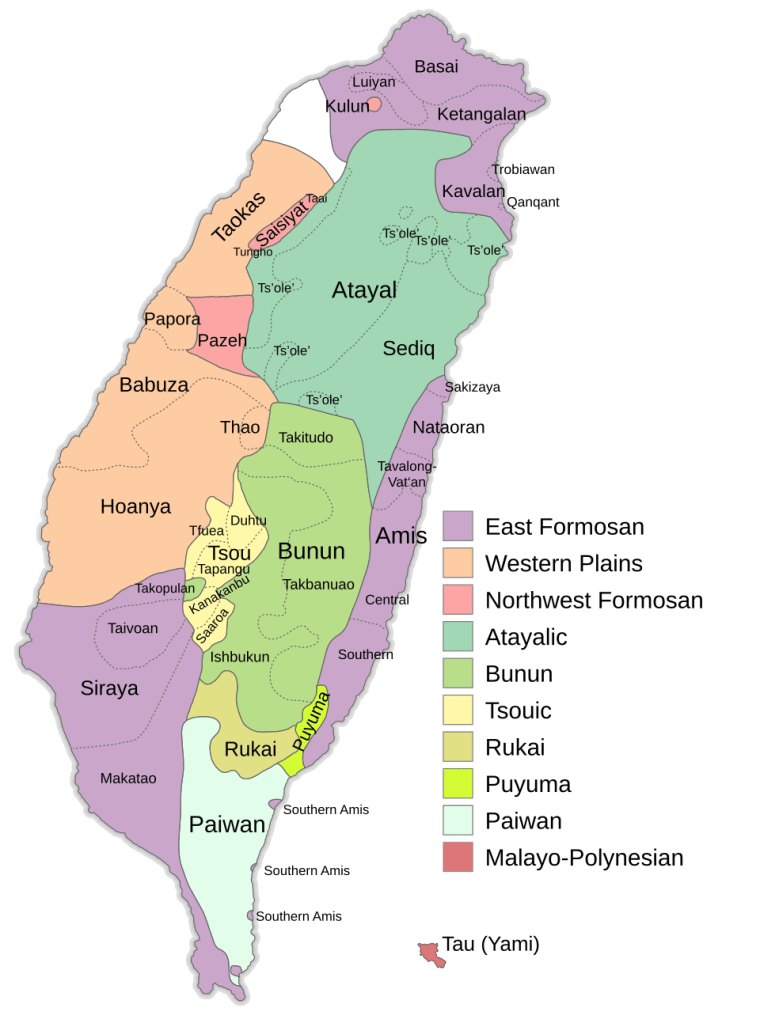
prior to colonization by the Chinese
in the 1600’s
( wikipedia.org )

INDIGENOUS LANGUAGE
in the HOUSEHOLD – 2010
( wikipedia.org )

STATUTORY REGIONAL LANGUAGE
( “HAKKA BASIC ACT” )
( wikipedia.org )
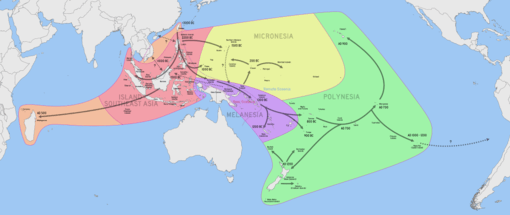
The languages of the “Austronesian People” show common links
stretching from Taiwan to Africa & to the eastern Pacific
( wikipedia.org )
- Languages Spoken in Nantou
- 南投縣文化中語言的角色
- Mandarin is the primary official language used for education, business & government. Taiwanese Hokkien (Taigi) is widely spoken in daily life, especially among the older generation, along with Hakka & several Indigenous Austronesian languages. Due to its mountain location, Nantou is home to many indigenous groups, particularly the Seediq, Bunun & Thao peoples who have their own native languages.
- Nantou is the second-largest county in Taiwan. It is known for being landlocked and mountainous with a higher concentration of indigenous languages compared to coastal cities: (i.) It is common for residents to be multilingual, communicating in a mix of Mandarin & Taiwanese. Mandarin is the official language and universally understood; (ii.) Taiwanese Hokkien (Taigi) is commonly used for local, informal, and social communication; (iii.) Indigenous Languages (Seediq, Bunun & Thao) are significant particularly in rural mountainous areas; (iv.) Hakka is poken by local communities; (v.) English is used in tourism, though not widely spoken in rural parts of Nantou.
- wikipedia.org – Nantou County – 南投縣 @ Wikipedia . org
- wikipedia.org – Nantou City – 南投市 @ Wikipedia . org
- lifeoftaiwan.com – The Indigenous People @ Life of Taiwan . com
- travel.com – Language landscape of Nantou County @ Travel . com
- citypopulation.de – Languages spoken in Nantou @ City Population website (Germany)
- thelanguagecloset.com – Languages spoken in Nantou
- youtube.com – Austronesian Language Introduction – Saisiyat Tribe @ Youtube . com
- nantou.gov.tw – Profile of Nantou County @ Nantou County Government – website
- taiwanobsessed.com – “A Travel Guide to Nantou, Taiwan’s Central Mountain County” @ Nick Kembel’s “Taiwan Obsessed” website (terrific site !!!)
- taiwanobsessed.com – Taiwanese Language: History, Examples, and More @ Nick Kembel’s “Taiwan Obsessed” website (terrific site !!!)
- wikipedia.org – Languages of Taiwan – 臺灣語言列表 @ Wikipedia . org
- peakvisor.com – Human History of Nantou @ Peak Advisor . com
- youtube.com – Austronesian Language Introduction – Hla’alua (Saaroa) Tribe @ Youtube . com
- taiwaneseamerican.org – Speaking in Layers: How Anne Is Building a Taiwanese Language Movement from New York to Nantou @ Taiwanese American . org
- researchgate.net – “Language shift of Taiwan’s indigenous peoples: a case study of Kanakanavu & Saaroa” @ Journal of Multilingual & Multicultural Development
Click here for the CloudBridge Home Pages . . . . .
. . . . . for Seediq ( 賽德克族 ) People & Language
. . . . . for Bunun ( 布農族 ) People & Language
. . . . . for Thao ( 邵族 ) People & Language
. . . . . for Hakka ( 客家 ) People & Language
. . . . . for Tsou (Cou) ( 鄒族 ) People & Language
- EASY SEARCH FOR MORE LINKS ! . . . . .
- scholar.google.com – Languages in the culture of Nantou – 南投縣文化中語言的角色 @ Google Scholar
- youtube.com – Languages in the culture of Nantou – 南投縣文化中語言的角色@ YouTube . com
- images.google.com – Languages in the culture of Nantou – 南投縣文化中語言的角色 @ Google Images
PEOPLES – 族 群

( wikipedia.org )
- People Groups of Nantou
- 南投縣文化中人物的角色
- Nantou County is a mountainous region in the central part of the Island of Taiwan with a rich diversity of indigenous peoples, notably the Thao people who reside around Sun Moon Lake. Major indigenous groups in the area include the Bunun, Seediq, Atayal, and Tsou. Additionally, several Plains Indigenous Peoples (Pingpu), such as the Arikun and Lloa, inhabit the Puli Basin area: (i.) Thao People (Sau): Primarily located in Ita Thao (Barawbaw) Village near Sun Moon Lake and Dapinglin, Shuili Township. They are one of Taiwan’s smallest recognized groups and are known for their ancestral worship and fishing traditions; (ii.) Bunun People are widely distributed in the Central Mountain Range, specifically in Nantou’s Renai and Xinyi townships; (iii.) Seediq People inhabit the high-altitude regions in north and east Nantou, particularly in Renai Township; (iv.) Atayal People reside in the northern mountainous areas of Nantou; (v.) Plains Indigenous Peoples (Pingpu): Many descendants of the Arikun and Lloa (often historically classified under the Hoanya group) live in the Puli Basin; (vi.) Tsou People are located in parts of Xinyi Township; (vii) Han People form the majority of the population and are mainly involved in agriculture and tourism.
- travelchinaguide.com – Nantou Travel Guide @ Travel China Guide . com
- cip.gov.tw – The Tribes in Taiwan @ Taiwan Council of Indigenous Peoples – website
- iwgia.org – Taiwan @ The Indigenous World 2023 (IWGIA – International Workgroup for Indigenous Affairs)
- taiwantoday.tw – Taiwan Promotes Indigenous Rights @ Taiwan Today e-zine
- wikipedia.org – Taiwan Indigenous Peoples – 臺灣原住民 @ Wikipedia . org
- https://itoldya420.getarchive.net – People groups in the culture of Nantou
- https://www.ocac.gov.tw – People groups in the culture of Nantou
- https://www.tripadvisor.com – People groups in the culture of Nantou
- https://www.smallislandbigsong.com – People groups in the culture of Nantou
- https://www.taiwanobsessed.com – People groups in the culture of Nantou
- https://joshuaproject.net – People groups in the culture of Nantou
- https://lifeoftaiwan.com – People groups in the culture of Nantou
- https://en.rti.org.tw – People groups in the culture of Nantou
- https://iwgia.org – People groups in the culture of Nantou
- https://ab.hl.gov.tw – People groups in the culture of Nantou
- https://spectralcodex.com – People groups in the culture of Nantou
- https://en.wikipedia.org – People groups in the culture of Nantou
- https://joshuaproject.net – People groups in the culture of Nantou
- https://www.moc.gov.tw – People groups in the culture of Nantou
- https://en.wikipedia.org – People groups in the culture of Nantou
- https://www.cip.gov.tw – People groups in the culture of Nantou
- https://www.sunmoonlake.gov.tw – People groups in the culture of Nantou
- https://www.cip.gov.tw – People groups in the culture of Nantou
- hl.gov.tw – People groups in the culture of Nantou – backgrounder
- wikipedia.org – People groups in the culture of Nantou – backgrounder
- wikipedia.org – People groups in the culture of Nantou – backgrounder
- nantou.gov.tw – People groups in the culture of Nantou – backgrounder
- apc.gov.tw – People groups in the culture of Nantou – backgrounder
- hotels.com – People groups in the culture of Nantou – backgrounder
Click here for the CloudBridge Home Pages . . . . .
. . . . . for Tsou (Cou) (鄒族) People & Language
- EASY SEARCH FOR MORE LINKS ! . . . . .
- scholar.google.com – People Groups in the culture of Nantou – 南投縣文化中族群的角色 @ Google Scholar
- youtube.com – People Groups in the culture of Nantou – 南投縣文化中族群的角色 @ YouTube . com
- images.google.com – People Groups in the culture of Nantou – 南投縣文化中族群的角色 @ Google Images
ETHNIC MINORITIES – 少 數 民 族
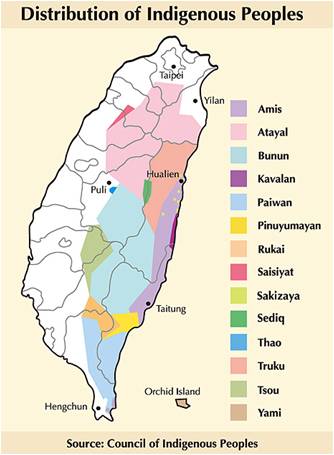
“recognized” Tribes of Indigenous Peoples
on the Island of Taiwan & Orchid Island ( 蘭嶼 )
( cip.gov.gw )
- Ethnic Minorities in Nantou
- 南投縣文化中少數民族的角色
- Ethnic Minorities and Indigenous Peoples of Nantou County, Taiwan (南投縣族群)
- Nantou County is one of Taiwan’s most culturally diverse regions. Although most residents today are Han Taiwanese (Hoklo, Hakka, and other Han groups), Nantou is especially important because it contains the traditional homelands of several Indigenous peoples of Taiwan (臺灣原住民族). The county’s mountains, river valleys, and the Sun Moon Lake area preserve some of Taiwan’s richest Indigenous cultural traditions.
- Indigenous residents make up a significant minority of Nantou’s population, with major communities concentrated in Ren’ai Township (仁愛鄉), Xinyi Township (信義鄉), Yuchi Township (魚池鄉), and surrounding mountain areas.
- Bunun People (布農族) — One of Nantou’s Largest Indigenous Groups
- Bunun people
- The Bunun are among the most prominent Indigenous peoples of Nantou.
- Main locations:
- Xinyi Township (信義鄉)
- Ren’ai Township (仁愛鄉)
- The Bunun traditionally lived in the high mountains of central Taiwan. Their society developed around:
- mountain agriculture
- millet cultivation
- hunting
- forest knowledge
- extended family networks
- The Bunun are internationally known for their remarkable polyphonic singing, especially the harvest prayer Pasibutbut (祈禱小米豐收歌), which uses complex overlapping vocal harmonies.
- Important cultural traditions include:
- Malahtangia / Ear Shooting Festival (射耳祭) — historically connected with hunting and warrior traditions
- millet rituals
- ancestral ceremonies
- mountain ecological knowledge
- The Bunun language (布農語) remains one of Taiwan’s major Indigenous languages.
- Atayal People (泰雅族)
- Atayal people
- The Atayal are one of Taiwan’s largest Indigenous peoples and have a long history in northern and central mountain Taiwan.
- Main Nantou location:
- Ren’ai Township (仁愛鄉)
- Traditional Atayal culture is strongly associated with:
- weaving
- facial tattoo traditions (面紋)
- forest knowledge
- hunting
- the social law system known as gaga (祖訓 / 傳統規範)
- Atayal communities in Nantou have maintained cultural revitalization efforts, including language education and traditional crafts.
- . Seediq People (賽德克族)
- Seediq people
- The Seediq are one of Nantou’s most historically significant Indigenous peoples.
- Main location:
- Ren’ai Township (仁愛鄉)
- They are closely related culturally and linguistically to the Atayal and Truku peoples, but the Seediq became officially recognized as a separate Indigenous group in 2008.
- The Seediq are widely known because of the historical Wushe Incident (霧社事件, 1930) during the Japanese colonial period.
- Important cultural elements include:
- hunting traditions
- weaving
- ancestral identity
- mountain village organization
- Seediq language
- The film Warriors of the Rainbow: Seediq Bale (賽德克·巴萊) introduced many international viewers to Seediq history.
- Thao People (邵族) — The People of Sun Moon Lake
- Thao people
- The Thao are one of Taiwan’s smallest officially recognized Indigenous peoples.
- Main location:
- Yuchi Township (魚池鄉)
- Sun Moon Lake (日月潭)
- The Thao have a unique cultural identity centered on the lake environment.
- Traditional life included:
- fishing
- lake-based agriculture
- boat culture
- ritual practices connected with ancestors
- The Thao language (邵語) is critically endangered because the number of fluent speakers is very small.
- The Thao are especially important symbolically because Sun Moon Lake is one of Taiwan’s most famous cultural landscapes.
- Tsou People (鄒族) Connections
- Tsou people
- The Tsou (Cou) are traditionally associated with Chiayi County’s Alishan region, but some historical connections extend toward southeastern Nantou mountain areas.
- Associated area:
- Xinyi Township (信義鄉) and nearby mountain regions
- Tsou culture is known for:
- traditional ceremonies
- hunting traditions
- warrior houses
- sacred community spaces
- Pingpu Peoples (平埔族群) — Early Lowland Indigenous Communities
- Before large-scale Han settlement, the Nantou region was also home to several Pingpu (平埔) Indigenous groups.
- Historically associated groups include:
- Pazeh (巴宰族)
- Taokas (道卡斯族)
- Siraya-related communities
- other Western Plains Indigenous peoples
- Many Pingpu communities experienced:
- migration
- cultural assimilation
- loss of language transmission
- Today, some descendants are working to preserve identity, genealogy, ceremonies, and language revival.
- Nantou’s Puli Basin (埔里盆地) has especially important historical connections with Pingpu communities.
- . Han Ethnic Communities in Nantou (Majority Population)
- Although Indigenous peoples are central to Nantou’s identity, most residents are Han Taiwanese.
- Hoklo / Minnan (閩南人)
- Common in:
- Nantou City
- Caotun
- Zhushan
- lowland towns
- Cultural contributions:
- temples
- markets
- agriculture
- Taiwanese Hokkien language
- Hakka (客家人)
- Important communities are found in:
- Caotun (草屯)
- Guoxing (國姓)
- Puli (埔里)
- Shuili (水里)
- Hakka culture remains visible through:
- traditional foods
- farming traditions
- festivals
- Nantou is unusual among Taiwan’s counties because a traveler can move through several distinct cultural worlds in a single day:
- Puli Basin → Hakka, Hoklo, Pingpu history
- Sun Moon Lake → Thao culture
- Ren’ai mountains → Atayal and Seediq villages
- Xinyi mountains → Bunun communities and highland traditions
- For anyone studying Taiwan’s cultural geography, Nantou is almost a living museum of the island’s transition from Indigenous mountain societies to modern multicultural Taiwan.
- https://www.hakka.gov.tw/chhakka/index
- https://en.wikipedia.org/wiki/Nantou_County?utm
- https://en.wikipedia.org/wiki/Seediq_people?utm
- https://data.gov.tw/en/datasets/169516?utm
- https://data.gov.tw/en/datasets/135076?utm
- https://data.gov.tw/en/datasets/120039?utm
- https://ab.hl.gov.tw/en-us/Explore/Ethnic_GroupIntro/1000/?print=1&utm
- https://ab.hl.gov.tw/en-us/Explore/Ethnic_GroupIntro/1000/?print=1&utm
- https://data.gov.tw/en/datasets/135079?utm
- https://minorityrights.org/country/taiwan/?utm
- https://data.gov.tw/en/datasets/161424?utm
- https://www.nantou.gov.tw/english/introduction-administrative-1.php?cid=398&dptid=&utm
- https://www.nantou.gov.tw/big5/index.php
- https://www.cip.gov.tw/zh-tw/index.html
- https://www.nantou.gov.tw/english/introduction-administrative-1.php?cid=398&dptid=&utm
- hl.gov.tw – Ethnic minorities in the culture of Nantou County – backgrounder
- nantou.gov.tw – Ethnic minorities in the culture of Nantou County – backgrounder
- dmtip.gov.tw – Ethnic minorities in the culture of Nantou County – backgrounder
- lifeoftaiwan.com – Ethnic minorities in the culture of Nantou County – backgrounder
- soas.ac.uk – Ethnic minorities in the culture of Nantou County – backgrounder
- wikipedia.org – Ethnic minorities in the culture of Nantou County – backgrounder
- wikipedia.org – Ethnic minorities in the culture of Nantou County – backgrounder
- wikipedia.org – Ethnic minorities in the culture of Nantou County – backgrounder
- trip.com – Ethnic minorities in the culture of Nantou County – backgrounder
- EASY SEARCH FOR MORE LINKS ! . . . .
- scholar.google.com – Ethnic Minorities in the culture of Nantou – 南投縣文化中少數民族的角色 @ Google Scholar
- youtube.com – Ethnic Minorities in the culture of Nantou – 南投縣文化中少數民族的角色 @ YouTube . com
- images.google.com – Ethnic Minorities in the culture of Nantou – 南投縣文化中少數民族的角色 @ Google Images
DEMOGRAPHICS – 人 口 分 布

( tradingeconomics.com )

( wikiwand.com )

( wikipedia.org )
- Demographics of Nantou
- 南投縣文化中人口分布的角色
- Demographics of Nantou County, Taiwan (南投縣人口與社會概況)
- Nantou County (南投縣) is Taiwan’s only landlocked county and occupies a large portion of the island’s mountainous interior. Its demographics are shaped by three major forces:
- Aging and population decline
- A mix of Han Taiwanese communities and Indigenous peoples
- A rural mountain geography with small villages and agricultural settlements
- The county is culturally rich but has experienced population decline as younger residents move toward larger cities such as Taichung.
- Population Size and Distribution
- Nantou has a population of roughly 470,000–480,000 people in recent years, making it one of Taiwan’s smaller counties by population. The population density is much lower than Taiwan’s western coastal cities because much of the county consists of steep mountains and forest.
- The population is concentrated in:
- Nantou City (南投市) — county government center
- Caotun Township (草屯鎮) — one of the largest urban areas
- Puli Township (埔里鎮) — important cultural and tourism center
- Zhushan Township (竹山鎮)
- Mingjian Township (名間鄉)
- Mountain townships such as:
- Ren’ai (仁愛鄉)
- Xinyi (信義鄉)
- Age Structure: One of Taiwan’s Older Counties
- Nantou has a relatively old population compared with Taiwan’s metropolitan areas.
- Major demographic trends:
- fewer children
- fewer young adults
- increasing elderly population
- continued out-migration of younger workers
- Many young people leave for:
- Taichung
- Hsinchu
- Taipei
- Kaohsiung
- for education and employment.
- This creates challenges for:
- rural schools
- agricultural succession
- healthcare services
- village sustainability
- Government population statistics track age structure by township and show the county’s aging pattern clearly.
- Ethnic Composition
- Taiwan does not generally classify residents by ethnicity in the same way as some countries, but Nantou’s cultural communities can be broadly described as follows:
- A. Hoklo Taiwanese (閩南人 / Holo)
- The largest historical population group.
- Concentrated in:
- Nantou City
- Caotun
- Zhushan
- Mingjian
- Jiji
- Cultural characteristics:
- Taiwanese Hokkien language
- temple-centered communities
- traditional markets
- farming traditions
- Hakka (客家人)
- Nantou has a significant Hakka population.
- Important Hakka areas:
- Caotun
- Guoxing (國姓)
- Puli
- Shuili
- Hakka communities contributed greatly to:
- tea cultivation
- fruit farming
- mountain agriculture
- local commerce
- Indigenous Peoples (原住民族)
- Nantou has one of Taiwan’s most important Indigenous populations because of its extensive mountain areas.
- Major Indigenous groups include:
- Bunun (布農族)
- Main areas:
- Xinyi Township
- Ren’ai Township
- Known for:
- mountain agriculture
- millet culture
- traditional singing
- Atayal (泰雅族)
- Main area:
- Ren’ai Township
- Known for:
- weaving
- forest knowledge
- traditional social systems
- Seediq (賽德克族)
- Main area:
- Ren’ai Township
- Known for:
- Wushe historical events
- weaving
- hunting traditions
- Thao (邵族)
- Main area:
- Sun Moon Lake (日月潭), Yuchi Township
- Known for:
- lake culture
- fishing traditions
- unique language heritage
- Nantou’s Indigenous population is especially concentrated in mountain townships rather than the urban lowlands.
- Urban vs. Rural Population Pattern
- Nantou has a strong contrast between:
- Western Lowlands
- Examples:
- Nantou City
- Caotun
- Zhushan
- Characteristics:
- denser population
- more businesses
- schools and hospitals
- mixed Hoklo/Hakka communities
- Mountain Regions
- Examples:
- Ren’ai
- Xinyi
- Characteristics:
- small villages
- Indigenous communities
- agriculture-based economy
- limited transportation access
- strong cultural traditions
- Migration and Population Change
- Nantou has experienced long-term population decline.
- Reasons include:
- Youth migration
- Young residents often move to:
- Taichung for jobs
- Hsinchu for technology careers
- Taipei for professional opportunities
- Agricultural changes
- Traditional industries such as:
- tea
- bamboo
- fruit farming
- mountain agriculture
- face challenges from:
- aging farmers
- changing markets
- climate pressures
- Tourism growth
- Some areas have gained new residents through:
- tourism businesses
- ecological projects
- cultural preservation programs
- Examples:
- Sun Moon Lake
- Cingjing Farm (清境農場)
- Puli cultural tourism
- Foreign Residents and New Immigrants
- Like other rural counties in Taiwan, Nantou has growing communities of newer immigrants, especially from:
- Vietnam (越南)
- Indonesia (印尼)
- Thailand (泰國)
- Philippines (菲律賓)
- They contribute to:
- agriculture
- caregiving
- family businesses
- local schools and communities
- Education and Economy
- Education
- Major educational centers include:
- National Chi Nan University in Puli
- local vocational schools
- agricultural education programs
- Education levels have risen significantly over recent generations, although mountain communities face additional challenges related to distance and resources.
- Economic Profile
- Traditional economic activities:
- tea production
- bamboo products
- fruit farming
- agriculture
- forestry
- Modern economic activities:
- tourism
- hospitality
- environmental education
- small businesses
- Important agricultural products include:
- Nantou tea (especially around Lugu and Mingjian)
- plums
- bananas
- grapes
- bamboo shoots
- Nantou can be described as:
- “A mountain county where Taiwan’s Indigenous heritage, Hakka agricultural traditions, Hoklo lowland culture, and modern rural transformation meet.”
- Unlike highly urbanized counties such as Taipei or Taichung, Nantou’s identity is defined less by population density and more by:
- landscapes
- village networks
- agricultural traditions
- Indigenous cultures
- ecological diversity
- Nantou is especially interesting because it acts as a cultural transition zone between western Taiwan’s Han Taiwanese plains and the Indigenous mountain world of the Central Mountain Range.
- https://data.gov.tw/en/datasets/20716?utm
- https://data.tainan.gov.tw/Resource/a875cd96-efbd-4475-8ce6-c58e10b13262?utm
- https://www.moi.gov.tw/News_Content.aspx?n=9&s=336847&sms=9009&utm
- https://data.gov.tw/en/datasets/176081?utm
- https://data.nantou.gov.tw/tr/dataset/0db1e7c2-751a-11ec-ac70-005056ab1e37?utm
- https://data.nantou.gov.tw/da_DK/dataset/0db1e7c2-751a-11ec-ac70-005056ab1e37?utm
- https://www.nantou.gov.tw/english/download_detail.php?cid=787&dptid=376480000&id=31599&utm
- https://www.nantou.gov.tw/english/introduction-administrative-1.php?cid=398&dptid=&utm
- https://data.gov.tw/dataset/169516?utm
- https://data.nantou.gov.tw/dv/dataset/0db1e7c2-751a-11ec-ac70-005056ab1e37?utm
- https://data.gov.tw/en/datasets/20716?utm
- https://www.nantou.gov.tw/english/introduction-administrative-1.php?cid=1607&dptid=376480000&utm
- https://data.nantou.gov.tw/dataset/0db1e7c2-751a-11ec-ac70-005056ab1e37?utm
- https://data.nantou.gov.tw/dataset/0db1e7c2-751a-11ec-ac70-005056ab1e37/resource/d00c1655-52ad-4d10-9197-7b5a906f9c9e?utm
- https://data.tainan.gov.tw/Resource/565c9815-6183-487c-a33b-99a9518ac414?utm
- https://data.tainan.gov.tw/Resource/0e45b61a-958a-457a-b3e0-eec4ac27af8a?utm
- https://www.ncpd.gov.tw – Demographics in the culture of Nantou
- https://worldpopulationreview.com – Demographics in the culture of Nantou
- https://www.ntshb.gov.tw – Demographics in the culture of Nantou
- https://eng.stat.gov.tw – Demographics in the culture of Nantou
- https://population.mongabay.com – Demographics in the culture of Nantou
- https://datacommons.one.org – Demographics in the culture of Nantou
- https://investtaiwan.nat.gov.tw – Demographics in the culture of Nantou
- https://www.ceicdata.com – Demographics in the culture of Nantou
- https://www.ceicdata.com – Demographics in the culture of Nantou
- https://en.wikipedia.org – Demographics in the culture of Nantou
- https://www.citypopulation.de – Demographics in the culture of Nantou
- https://www.citypopulation.de – Demographics in the culture of Nantou
- EASY SEARCH FOR MORE LINKS ! . . . . .
- scholar.google.com – Demographics in the culture of Nantou – 南投縣文化中人口分布的角色 @ Google Scholar . com
- youtube.com – Demographics in the culture of Nantou – 南投縣文化中人口分布的角色 @ YouTube . com
- images.google.com – Demographics in the culture of Nantou – 南投縣文化中人口分布的角色 @ Google Images
* * * * *
Click for the CloudBridge Home Page for Nantou
Click for links to Culture for Nantou
Click for links to Business for Nantou
Click for links to Travel for Nantou
to Nature & Environment of Nantou
For links to Languages & Peoples of Nantou . . . . .
. . . . . scroll up through this page
* * * * *
NOTE : This site contains links to our ”favorite” and “most useful” websites . . . but the CloudBridge Project does not endorse or guarantee any of the products or services available through the links on the pages of this website.
本站包含了我們的 “最愛” 以及 “最有用” 的網站連結,但雲橋語文計劃並不保證其連結的有效性或對其背書.
Welcome to send us an email with your thoughts or comments:
欢迎用电子邮件的方式分享您的意见和建议:
Email: CloudBridgeTaiwan@gmail . com
LATEST PAGE UPDATE: July 12 , 2026
最後一次更新時間為: 2026 / 07 / 12
Copyright ©2021 CloudBridge Project. All rights reserved.
版權所有 ©2021 雲橋語文計劃. 保留所有權利.
 CloudBridgeTaiwan