* * * * *
台灣 / 臺東縣 / 蘭嶼 – 語言 及 人物
* * * * *

( ontheworldmap.com )

& Penghu, Kinmen & Matsu Islands
Also shown are:
Green Island ( Lu Dao ) & Orchid Island ( Lan Yu )
( cia.gov )
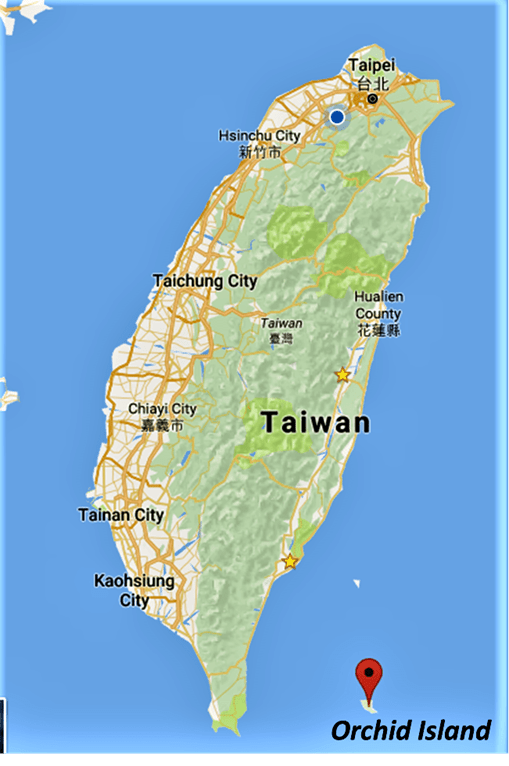
near the Island of Taiwan
( borneoficus.info )
* * * * *
Links to individual topics for LANYU – LANGUAGE & PEOPLES
are displayed on this page in the following categories :

Links to culture of languages & peoples of LANYYU
* * * * *
Click here for the Cloudbridge Home Page for Orchid Island
Click here for links to Culture for Orchid Island
Click here for links to Business for Orchid Island
Click here for links to Travel for Orchid Island
Click here for links to Nature & Environment of Orchid Island
For links to Languages & Peoples of Orchid Island . . . . .
. . . . . please continue to scroll down through this page
* * * * *
LANYU – 台灣 / 臺東縣 / 蘭嶼
LANGUAGE & PEOPLES – 語言 及 人物
* * * * *
LANGUAGE – 語 言

LANGUAGE in the HOME – 2010
Blue: Mandarin Green: Hokkien
HOT PINK: Hakka
BURGUNDY: Austronesian Langauges
( wikipedia.org )
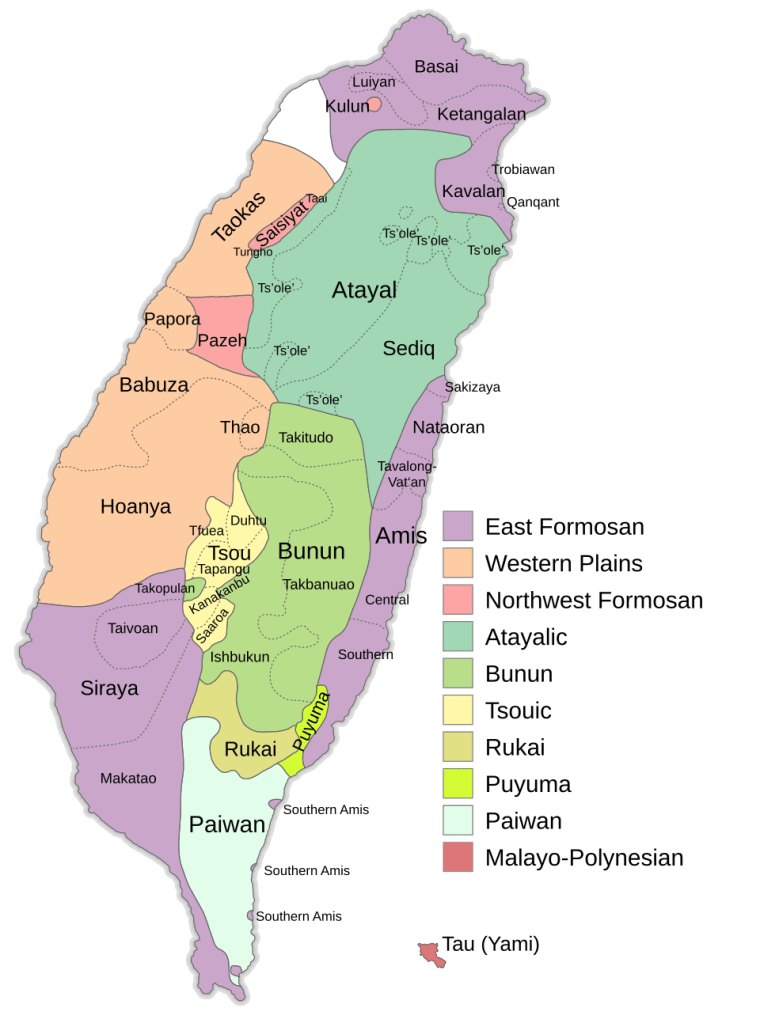
prior to colonization by the Chinese
in the 1600’s
( wikipedia.org )

INDIGENOUS LANGUAGE
in the HOUSEHOLD – 2010
( wikipedia.org )

STATUTORY REGIONAL LANGUAGE
( “HAKKA BASIC ACT” )
( wikipedia.org )
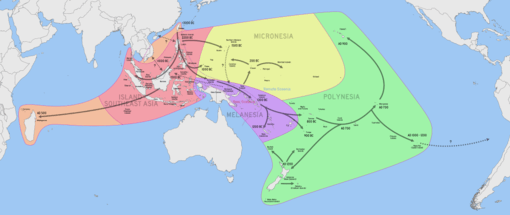
The languages of the “Austronesian People” show common links
stretching from Taiwan to Africa & to the eastern Pacific
( wikipedia.org )
- Languages spoken on Lanyu – 蘭嶼文化中語言的角色
- The primary local language spoken on Lanyu (Orchid Island) is Tao (also known as Yami or ciriciring no Tao), an Austronesian language related to those in the northern Philippines. Due to Taiwan’s administration, Mandarin Chinese is widely spoken, especially among younger generations, while some residents also speak Taiwanese Hokkien.
- Tao/Yami Language: The native language of the Tao people (around 3,800 speakers), which is distinct from Formosan languages on the Taiwan mainland and closer to the Batanic branch of Malayo-Polynesian languages. While often referred to in literature as “Yami” (a term from Japanese ethnologists), the people prefer to be called “Tao,” which means “person”. While Tao is used in daily life, especially among elders, Mandarin is the language of instruction and administration. The community is bilingual to varying degrees, using Tao for traditional culture and Mandarin for commerce and education.
- https://www.youtube.com
- https://www.cip.gov.tw
- Blogs
- pinyin.info – Lanyu signage examples @ Pinyin News
- medium.com – “Walking around Lanyu Island” @ Medium . com
- umich.edu – Recreation in the culture of Lanyu (Orchid Island) – backgrounder
- redaroundtheworld.com – “Lost on Lanyu” @ Red Around the World . com
- wikitravel.org – Recreation in the culture of Lanyu (Orchid Island) – backgrounder
- tripadvisor.com – Recreation in the culture of Lanyu (Orchid Island) – backgrounder
- tripadvisor.com – Recreation in the culture of Lanyu (Orchid Island) – backgrounder
- trip.com – Things to do on Lanyu @ Trip . com
- EASY SEARCH FOR MORE LINKS ! . . . . .
- scholar.google.com – Languages in the culture of Lanyu – 蘭嶼文化中語言的角色 @ Google Scholar
- youtube.com – Languages in the culture of Lanyu – 蘭嶼文化中語言的角色 @ YouTube . com
- images.google.com – Languages in the culture of Lanyu – 蘭嶼文化中語言的角色 @ Google Images
PEOPLES – 人 物

( wikipedia.org )
- People Groups of Lanyu – 蘭嶼文化中人物 的角色
- Orchid Island (Lanyu) is home to the Tao people (also known as the Yami), an indigenous Austronesian group with a distinct maritime culture closely related to the Ivatan people of the northern Philippines. They call themselves “Tao” (“man”) and the island Ponso no Tao (“Island of the People”).
- Population & Location: Around 4,600+ inhabitants live in six distinct coastal villages: Yeyou, Fisherman (Iratay), Hongtou (Imourod), Langdao, Dongqing, and Yeyin.
- Culture & Traditions: They are famous for their sophisticated, handcrafted wooden plank boats (tatala) and the annual, sacred Flying Fish Festival.
- Lifestyle: Traditionally, they lived in semi-subterranean houses designed to withstand typhoons, though most now live in modern concrete structures.
- Economy: Their culture is deeply connected to the ocean for fishing and farming millet.
- Naming Note: While officially recognized by the Taiwanese government as the Yami, many prefer the term “Tao”.
- The island is marked by its unique traditional architecture, distinctive silver helmet rituals, and a society closely governed by the natural rhythms of the sea.
- https://www.cip.gov.tw/en/tribe/grid-list/6521E76602C72C42D0636733C6861689/info.html?cumid=D0636733C6861689
- https://en.wikipedia.org/wiki/Tao_people
- https://tim-hch.medium.com/children-of-orchid-2b2f900e6e9b
- https://www.taiwanese-secrets.com/orchid-island/
- https://madoken.jp/en/series/8853/
- https://www.iias.asia/the-newsletter/article/ta-u-and-their-island-home
- https://cwm.uj.edu.pl/documents/1333512/38600615/The+Orchid+Island+-+Lanyn.+Paradise+on+Earth/22c9f49f-4164-49d1-92df-115f7a66f89d
- https://en.wikipedia.org/wiki/Orchid_Island
- https://ocean-archive.org/collection/144
- https://www.goteamjosh.com/blog/lanyu
- https://www.traintokitezh.com/lanyu-island-people-taiwan/
- https://topics.amcham.com.tw/2018/03/lanyu-taiwans-orchid-island/
- https://gastronomictraveler.blog/2020/11/29/guide-to-lanyu-orchid-island-taiwan-the-most-unique-outer-island/
- https://taiwantoday.tw/AMP/Politics/Top-News/102354/President-Tsai-visits-indigenous-tribe-on-Orchid-Island
- https://www.youtube.com/watch?v=UpbnI03NPF8
- https://focustaiwan.tw/video/004337370
- https://www.taiwan-panorama.com/en/Articles/Details?Guid=a328c434-3fae-4261-a26f-69e7145ad896&CatId=10&postname=952%20Vazay%20Tamo%3A%20The%20Voice%20of%20Orchid%20Island&srsltid=AfmBOoqeakumYZWVx4mBNtpQxGBVRpSdL-K3TivtUhmUQQNQcT4z2YKF
- https://www.taiwan-panorama.com/en/Articles/Details?Guid=27ddd070-dbe2-492d-9158-d669532ac972&CatId=11&postname=New%20Life%20for%20Lanyu%27s%20Children&srsltid=AfmBOoplM3-MRYVmODjs3xwlngkJ2othrcyrhfHaLzpQh6WJH5IIuC3l
- https://www.iias.asia/the-newsletter/article/tourism-orchid-island
- https://www.researchgate.net/figure/Maps-of-Taiwan-left-and-Lanyu-Orchid-Island-right-Source-You-Ren-Chung-2021_fig1_360015263
- https://www.taipeitimes.com/News/taiwan/archives/2023/02/16/2003794452
- https://www.travelandtourworld.com/news/article/lanyu-orchid-island-a-tranquil-escape-into-taiwans-indigenous-culture-coral-reefs-and-natural-beauty/
- https://pages.stolaf.edu/mtoc/2019/05/08/2497/
- https://thesensiblefay.com/blog/2023/lanyu-taiwan-orchid-island-taiwan-travel-guide
- https://www.bbc.com/news/world-radio-and-tv-15182502
- https://irene-brand.medium.com/guide-for-3-day-trip-a-cultural-paradise-lanyu-orchid-island-a28a8644d0bd
- https://lanyu.land/ponso-no-tao-island-of-the-people-irala/
- https://www.culturalsurvival.org/publications/cultural-survival-quarterly/minority-within-minority-cultural-survival-taiwans-orchid
- https://www.foreignersintaiwan.com/blog/orchid-island-ponso-no-tao-lanyu
- https://www.bessytourtaiwan.com/post/underground-houses-of-orchid-island
- https://www.taiwan-panorama.com/en/Articles/Details?Guid=d6b9c6d4-2d39-43bf-a709-7e6a999f5cea&CatId=10&postname=The%20Wisdom%20of%20a%20Maritime%20People%20-Keeping%20Lanyu%E2%80%99s%20Tao%20Culture%20Alive&srsltid=AfmBOooDRWeoGteITKyJyKgykKEDHVakmW8DHzQXSKWm7BEh62LDd0ua
- https://www.moc.gov.tw/en/News_Content2.aspx?n=398&s=14058
- https://www.youtube.com/watch?v=lRSidahQj_M
- https://www.youtube.com/watch?v=pnzSS7wlJDg
- https://www.youtube.com/watch?v=7wMLKP94tfA
- https://lanyu.land/the-6-villages-of-lanyu-orchid-island/
- EASY SEARCH FOR MORE LINKS ! . . . . .
- scholar.google.com – People groups in the culture of Lanyu – 蘭嶼文化中人物 的角色 @ Google Scholar
- youtube.com – People groups in the culture of Lanyu – 蘭嶼文化中人物 的角色 @ YouTube . com
- images.google.com – People groups in the culture of Lanyu – 蘭嶼文化中人物 的角色 @ Google Images
ETHNIC MINORITIES – 少 數 民 族
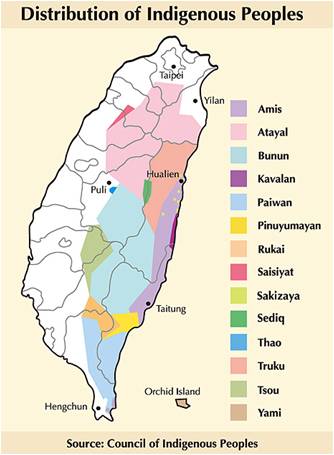
- Ethnic minorities of Lanyu – 蘭嶼文化中少數民的角色
- Orchid Island (Lanyu), Taiwan, is home to the Tao people (also known by the Japanese-coined exonym Yami), an Austronesian indigenous group distinct from Taiwan’s Han Chinese majority and other indigenous tribes. With a population of roughly 4,701 (as of 2020), they are renowned for their maritime culture, traditional underground houses, and skilled, decorated boat-building.
- Key Cultural and Social Aspects:
- Origin: The Tao are closely related to the Ivatan people in the Batanes archipelago of the Philippines, sharing similar languages and cultures.
- The “Island of the People”: The Tao refer to their home as Ponso no Tao or Irala.
- Traditional Life: Their culture is deeply tied to the sea, highlighted by the annual Flying Fish Festival and strict taboos regarding fish consumption (classifying fish as “good” or “bad”).
- Traditional Roles: Men typically handle fishing and boat-building, while women specialize in farming taro and sweet potatoes.
- Architecture: Traditional subterranean dwellings, built into the ground for protection against typhoons and hot weather, are a major, though dwindling, cultural feature.
- Six Tribes: The island is divided into six villages: Hongtou, Yuren, Yeyou, Langdao, Dongqing, and Yeyin.
- Key Issues and Modern Challenges:
- Nuclear Waste: The Taiwan Power Company built a nuclear waste storage plant on the island in 1982 without local consent, causing decades of protests and, in some cases, providing free electricity to residents.
- Modernization & Tourism: The lifting of strict government controls in 1967 brought increased tourism, changing traditional lifestyles and causing the demolition of many traditional homes for modern housing.
- Brain Drain: Many young Tao people move to the main island of Taiwan for work and education, challenging the preservation of their traditional culture.
- Land Use Disputes: Development for tourism and lease disputes have caused tension.
- https://www.cip.gov.tw/en/tribe/grid-list/6521E76602C72C42D0636733C6861689/info.html?cumid=D0636733C6861689
- https://en.wikipedia.org/wiki/Tao_people
- https://tim-hch.medium.com/children-of-orchid-2b2f900e6e9b
- https://www.iias.asia/the-newsletter/article/ta-u-and-their-island-home
- https://madoken.jp/en/series/8853/
- https://www.traintokitezh.com/lanyu-island-people-taiwan/
- https://www.bessytourtaiwan.com/post/underground-houses-of-orchid-island
- https://www.youtube.com/watch?v=rYX6wwtgwFg
- https://focustaiwan.tw/video/004337370
- https://lanyu.land/calendar-of-the-tao/
- https://www.travelking.com.tw/eng/tourguide/scenery223.html
- https://www.youtube.com/watch?v=UpbnI03NPF8
- https://minorityrights.org/country/taiwan/
- https://xray-mag.com/content/orchid-island-dive-taiwan-part-5
- https://www.iias.asia/the-newsletter/article/tourism-orchid-island
- https://www.travelandtourworld.com/news/article/lanyu-orchid-island-a-tranquil-escape-into-taiwans-indigenous-culture-coral-reefs-and-natural-beauty/
- https://www.cip.gov.tw/en/tribe/grid-list/index.html?cumid=5DD9C4959C302B9FD0636733C6861689
- https://ai.stanford.edu/~latombe/mountain/photo/taiwan/lanyu.htm
- https://travel-blog.noctua-software.com/2014-06-lanyu.html
- https://www.youtube.com/watch?v=7UA1ZuGWq60
- https://www.youtube.com/watch?v=TjzPWhZxRwk
- https://ocean-archive.org/collection/144
- https://en.wikivoyage.org/wiki/Orchid_Island
- https://www.taiwanese-secrets.com/orchid-island/
- https://www.taiwan-panorama.com/en/Articles/Details?Guid=d6b9c6d4-2d39-43bf-a709-7e6a999f5cea&CatId=10&postname=The%20Wisdom%20of%20a%20Maritime%20People%20-Keeping%20Lanyu%E2%80%99s%20Tao%20Culture%20Alive&srsltid=AfmBOopMe_ce6fkD_V_2J1ryQvDujpRpa35V16yOYsy5zOsCNeBMqwHf
- https://lanyu.land/ponso-no-tao-island-of-the-people-irala/
- https://www.adventuresaroundasia.com/aboriginal-taiwan-visiting-orchid-island/
- https://www.youtube.com/watch?v=7wMLKP94tfA
- https://www.youtube.com/watch?v=lRSidahQj_M
- https://taiwantravelblog.com/orchid-island-lanyu/
- https://www.culturalsurvival.org/publications/cultural-survival-quarterly/minority-within-minority-cultural-survival-taiwans-orchid
- EASY SEARCH FOR MORE LINKS ! . . . . .
- scholar.google.com – Ethnic minorities in the culture of Lanyu – 蘭嶼文化中少數民的角色 @ Google Scholar
- youtube.com – Ethnic minorities in the culture of Lanyu – 蘭嶼文化中少數民的角色 @ YouTube . com
- images.google.com – Ethnic minorities in the culture of Lanyu – 蘭嶼文化中少數民的角色 @ Google Images
DEMOGRAPHICS – 人 口 分 布

( tradingeconomics.com )

( wikiwand.com )
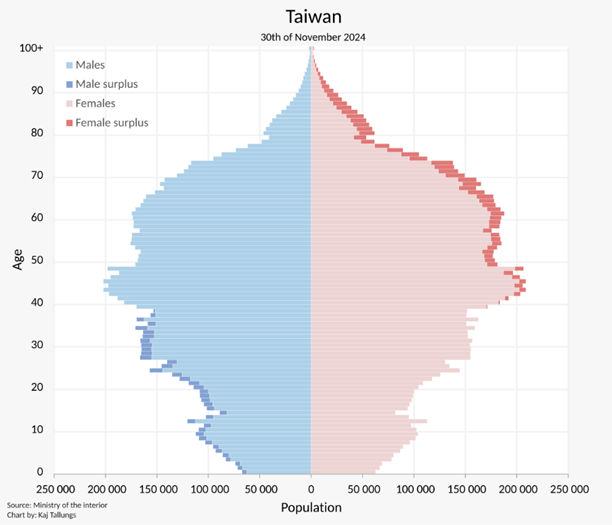
( wikiwand.com )
- Demographics of Lanyu – 蘭嶼文化中人口分布的角色
- Lanyu (Orchid Island) in Taiwan has a total population of approximately 4,000–5,000, of which roughly 80–90% are indigenous [Tao people] (formerly called Yami), with the remainder being mostly Han Chinese settlers. The residents are concentrated in six coastal villages, relying primarily on fishing—notably the flying fish season—and agriculture.
- Population and Ethnic Composition
- Total Population: Estimated at roughly 4,000–5,000 residents.
- Tao (Yami) People: The indigenous inhabitants make up the majority, with around 2,000–2,600 living permanently on the island.
- Han Chinese/Others: Roughly 1,500–1,600 residents are non-indigenous settlers.
- Identity: The islanders refer to themselves as Tao (meaning “man”) or Yami and are culturally distinct from the Han Chinese population on the mainland.
- Culture: The Tao are distinct from other Taiwanese aboriginal tribes and share close linguistic and cultural ties with the Ivatan people of the Batanes Islands in the Philippines.
- Traditions: Fishing is central to their culture, particularly the annual Flying Fish Festival, which informs much of their ecological knowledge and social structure.
- Religion: Many inhabitants are Christian but maintain traditional beliefs.
- Villages: The population is clustered in six primary villages along the coast: Yeyu, Langdao, Dongqing, Yayo, Hongtou, and Irala.
- Demographic Trends
- Tourism Impact: While the permanent population is around 5,000, the island hosts over 100,000 tourists annually, significantly impacting the local economy.
- Migration: Many local people travel back and forth to the Taiwanese mainland.
- Economy: The economy is based on traditional fishing, farming (taro and sweet potato), and a growing tourism industry.
- https://en.wikipedia.org/wiki/Orchid_Island
- https://medium.com/3240-s2023/taiwans-nuclear-crisis-and-an-indigenous-tribe-s-struggle-for-autonomy-bd9d47a7a6a0
- https://herpconservation.com/uploads/1/2/9/7/129792704/aquatic_snakes_diversity_and_natural_history.pdf
- https://www.researchgate.net/publication/230006841_The_survival_rate_of_Lanyu_Scops_Owls_Otus_elegans_botelensis
- https://www.tm.mahidol.ac.th/seameo/2009-40-4/19-4518.pdf
- https://research.fs.usda.gov/download/treesearch/10254.pdf
- https://pmc.ncbi.nlm.nih.gov/articles/PMC8084327/
- https://www.besnet.world/thematic-areas/land-degradation-neutrality/
- https://mdpi-res.com/bookfiles/book/5155/Advances_in_East_Asian_Agricultural_Origins_Studies_The_Pleistocene_to_Holocene_Transition.pdf?v=1744506280
- https://npolicy.org/wp-content/uploads/2024/01/Web-Net-Zero-and-Nonproliferation-Assessing-Nuclear-Power-and-its-Alternatives.pdf
- https://dvoc.org/Publications/Larus/Spring2007/LoL_2007_spring_s.pdf
- https://ncsd.ndc.gov.tw/_ofu/Download/en/home/2024%20Annual%20Report%20on%20National%20Sustainable%20Development.pdf
- https://ndl.ethernet.edu.et/bitstream/123456789/56719/1/142pdf.pdf
- https://www.fiafnet.org/programming-game?ref=hyperallergic.com
- http://www.iacseaturtle.org/docs/tecnicos/REPORT%20Marine%20turtles%20Ramsar_dec21-web.pdf
- https://unesdoc.unesco.org/ark:/48223/pf0000187026
- https://repfocus.dk/Chelonia_bibliography.html
- https://www.airroi.com/airbnb-data/taiwan/taitung-county/orchid-island
- https://www.academia.edu/6408962/2012_Retrieving_Ancestral_Power_from_Landscape_Cultural_Struggle_within_Yami_Ecological_memory_on_Orchid_Island_In_Taiwan_Since_Martial_Law_Society_Culture_Politics_and_Economy_D_Blundell_ed_University_of_California_Berkeley_and_National_Taiwan_University_Press_P_183_210
- https://brill.com/view/journals/ctoz/94/1/article-p64_3.xml?srsltid=AfmBOorF4IT6vlaXTbtl0P8rofOBCCHGBUi-ztjPhax5sdPe2HbMs93Y
- https://esajournals.onlinelibrary.wiley.com/doi/10.1002/ecy.4368
- https://read.dukeupress.edu/prism/article/19/2/265/342384/IntroductionWorlds-Built-of-Sand
- https://www.researchgate.net/publication/332453617_The_spread_of_raised_ay_and_aw_in_Yami_From_regional_distinctiveness_to_ethnic_identity_marker
- https://www.cambridge.org/core/journals/journal-of-linguistic-geography/article/abs/spread-of-raised-ay-and-aw-in-yami-from-regional-distinctiveness-to-ethnic-identity-marker/4E54215E5062B002AB9D8D8F0EEB2B4C
- https://open.clemson.edu/cgi/viewcontent.cgi?article=1047&context=all_theses
- https://cwm.uj.edu.pl/documents/1333512/38600615/The+Orchid+Island+-+Lanyn.+Paradise+on+Earth/22c9f49f-4164-49d1-92df-115f7a66f89d
- https://ai.stanford.edu/~latombe/mountain/photo/taiwan/lanyu.htm
- https://www.foreignersintaiwan.com/blog/orchid-island-ponso-no-tao-lanyu
- https://www.citypopulation.de/en/taiwan/admin/taidong/1001416__lanyu/
- EASY SEARCH FOR MORE LINKS ! . . . . .
- scholar.google.com – Demographics in the culture of Lanyu – 蘭嶼文化中人口分布的角色 @ Google Scholar
- youtube.com – Demographics in the culture of Lanyu – 蘭嶼文化中人口分布的角色 @ YouTube . com
- images.google.com – Demographics in the culture of Lanyu – 蘭嶼文化中人口分布的角色 @ Google Images
* * * * *
Click here for the Cloudbridge Home Page for Orchid Island
Click here for links to Culture for Orchid Island
Click here for links to Business for Orchid Island
Click here for links to Travel for Orchid Island
Click here for links to Nature & Environment of Orchid Island
For links to Languages & Peoples of Orchid Island . . . . .
. . . . . please scroll up through this page
* * * * *
NOTE : This site contains links to our ”favorite” and “most useful” websites . . . but the CloudBridge Project does not endorse or guarantee any of the products or services available through the links on the pages of this website.
本站包含了我們的 “最愛” 以及 “最有用” 的網站連結,但雲橋語文計劃並不保證其連結的有效性或對其背書.
Welcome to send us an email with your thoughts or comments:
欢迎用电子邮件的方式分享您的意见和建议:
Email: CloudBridgeTaiwan@gmail . com
LATEST PAGE UPDATE: May 14 , 2026
最後一次更新時間為: 2026 / 05 / 14
Copyright ©2021 CloudBridge Project. All rights reserved.
版權所有 ©2021 雲橋語文計劃. 保留所有權利.

