Click here to return to the CloudBridge Home Page
for the Indigenous Peoples of Taiwan
Click here to return to the CloudBridge Home Page
for Language & Peoples of Taiwan

( ontheworldmap.com )

Also shown are:
Green Island (Lu Dao) & Orchid Island (Lan Yu).
( cia.gov )

( nouahsark.com )

Alternate spellings or names:
Taroko (Truku, Seediq); Yami (Tao)
( wikipedia . org )

( geology . com )
* * * * *
THE BUNUN PEOPLE – 布農族
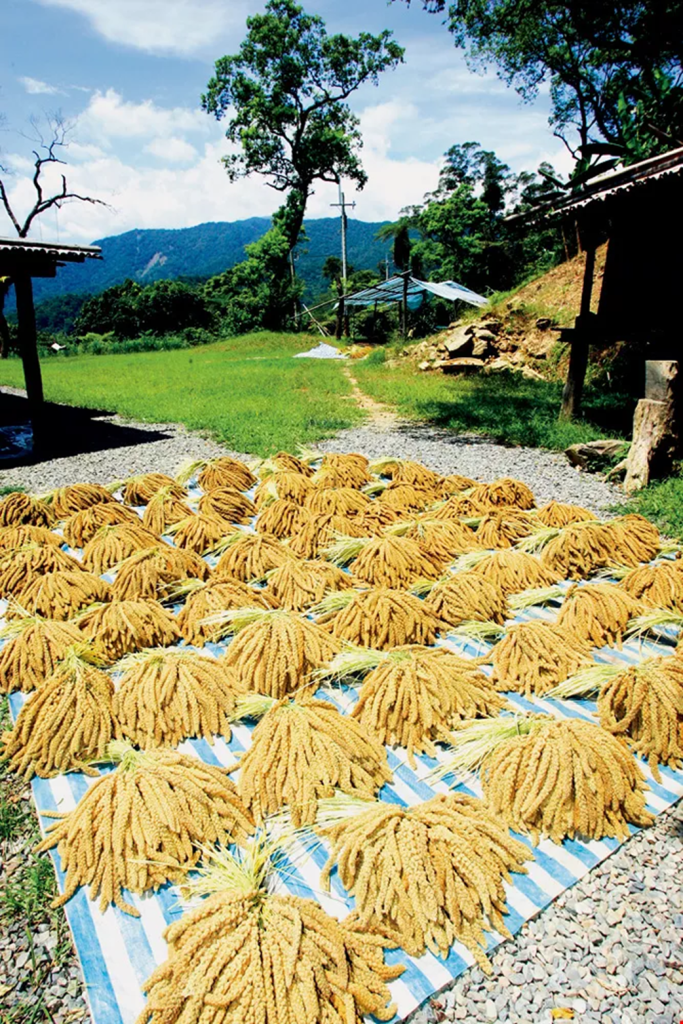
- The Bunun Indigenous People of Taiwan (often spelled Bunun, sometimes written Bunong) are one of Taiwan’s officially-recognized Indigenous peoples & are especially known for their rich musical traditions & strong clan-based social structure.
- The current estimate of the population of Bunun People on the Island of Taiwan is approximately 60,000–65,000 persons. The Bunun traditionally inhabit high-altitude mountain areas in central & southern Taiwan, including parts of: (i) Nantou County (ii) Hualien County; (iii) Taitung County; (iv) Kaohsiung; and (v) Pingtung County, particularluy the mountainous interior areas of eastern Pingtung County.
- The deep connection of the Bunun People to the mountain landscapes in their homeland areas strongly shapes their culture, subsistence practices & view of the world around them.
- The language spoken by the Bunun People belongs to the Formosan (Austronesian) language family. It has several dialects, including Takivatan, Takituduh, Takbanuaz, * Takivatan. The language is endangered, but revitalization programs are active in schools & communities
- The society of the Bunun People is traditionally patrilineal, and is organized around extended family clans. Elders play an important role in decision-making. There is strong emphasis on collective responsibility & cooperation.
- The Bunun People practice subsistence and engage in a traditional economy. Historically, the Bunun practiced slash-and-burn agriculture, and cultivated crops of millet, sweet potatoes & taro. The cultivation of millet has been particularly ip, ortantnot just as a food source, but as a sacred crop tied to ritual life. The diet is supplemented by hunting, especially for deer & wild boar. The diet is also drawn from the results of foraging in forest environments.
- The beliefs and spirituality of traditional Bunun culture centers on: (i.) ancestral spirits; (ii.) nature spirits; and (iii.) strict ritual calendars governing agriculture & hunting. Ritual specialists guide ceremonies to maintain harmony between humans, nature & the spirit world. Many Bunun today also practice Christianity, often blended with traditional values.
- The Bunun are internationally recognizad for their polyphonic singing, particularly the “Pasibutbut”. This is a complex, slowly-rising multi-part chant that is traditionally sung as a prayer for a successful harvest of the millet crop. “Pasibutut” is recognized worldwide as one of the most remarkable forms of Indigenous vocal music. The “Pasibutbut” musical tradition has been widely studied by ethnomusicologists & has been featured in international performances.
- The traditional clothing of the Bunun is typically fashioned from hemp or cotton, often dark blue or black in color. The clothing is commonly decorated with white geometric patterns. In additional to traditional clothing, other items crafted by the Bunun artisans that are central to daily life include: hunting tools, woven baskets & wooden utensils.
- wikipedia.org
- cip.gov.tw – The Bunun People @ Council of Indigenous Peoples website
- livingintaiwan.com – Bunum Ear Shooting Festival @ Living in Taiwan . com
- smallislandbigsong.com – Luona Village Cultural Group @ Small Island Big Song . com
- https://colostate.pressbooks.pub/pgrsuccessstories/chapter/foxtail-millet-reintroduction-to-taiwan/
- https://en.wikipedia.org/wiki/Bunun_people
- https://www.taiwan-panorama.com/en/Articles/Details?Guid=4e9b4157-c897-4098-afa2-f0ff1fb9ed94&CatId=7&postname=Millet%20Makes%20a%20Return%20to%20Taiwan
- https://katyhuiwenhung.blogspot.com/2020/12/indigenous-note-forgotten-oil-millet-of.html
- https://www.taipeitimes.com/News/taiwan/archives/2020/04/14/2003734582
- https://www.taipeitimes.com/News/taiwan/archives/2022/07/09/2003781441
- EASY SEARCH FOR MORE LINKS ! . . . . .
THE BUNUN LANGUAGE – 布農語s
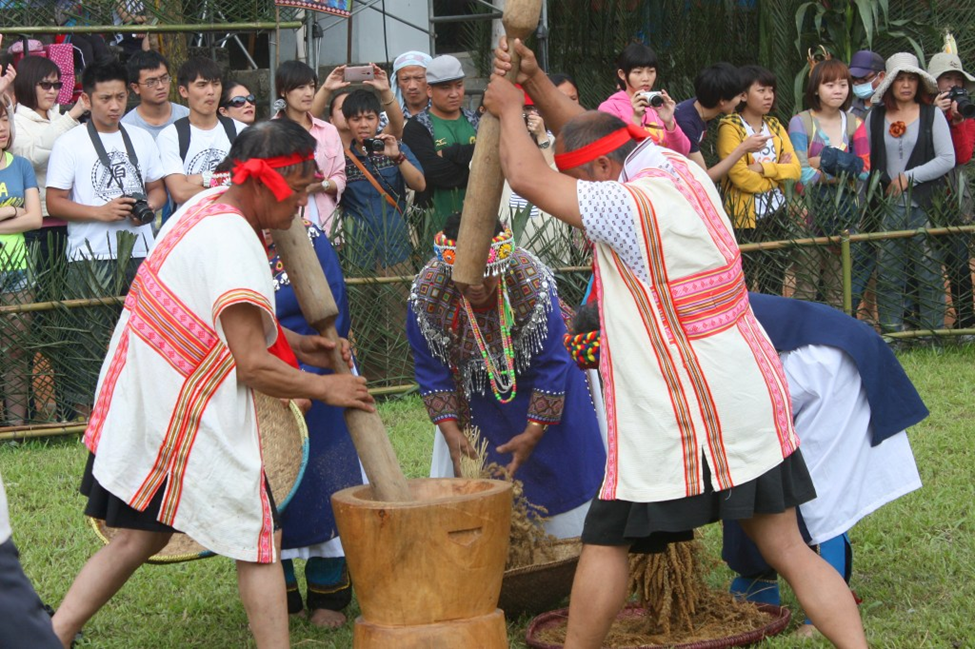
- The Language of the Bunun People – 布農族的語言
- _____ – The Language of the Bunun People – 布農族的語言
- https://vocus.cc/article/69841b20fd89780001e62b7f
- https://culture.teldap.tw/culture/index.php?option=com_search&searchword=Bunun&areas[]=jtags
- https://www.coelang.tufs.ac.jp/multilingual_corpus/bunun/index.html?contents_xml=top&menulang=en
- EASY SEARCH FOR MORE LINKS ! . . . . .
- scholar.google.com – The Language of the Bunun People – 布農族的語言 @ Google Scholar
- youtube.com – The Language of the Bunun People – 布農族的語言 @ You Tube . com
- images.google.com – The Language of the Bunun People – 布農族的語言 @ Google Images
* * * * *
Click here to return to the CloudBridge Home Page
for the Indigenous Peoples of Taiwan
Click here to return to the CloudBridge Home Page
for Language & Peoples of Taiwan
* * * * *
NOTE : This site contains links to our ”favorite” and “most useful” websites . . . but the CloudBridge Project does not endorse or guarantee any of the products or services available through the links on the pages of this website.
本站包含了我們的 “最愛” 以及 “最有用” 的網站連結,但雲橋語文計劃並不保證其連結的有效性或對其背書.
Welcome to send us an email with your thoughts or comments:
欢迎用电子邮件的方式分享您的意见和建议:
Email: CloudBridgeTaiwan @ gmail . com
LATEST PAGE UPDATE: January 14 , 2026 .
最後一次更新時間為: 2026 / 01 / 14 .
Copyright ©2021 CloudBridge Project. All rights reserved.
版權所有 ©2021 雲橋語文計劃. 保留所有權利.
 CloudBridgeTaiwan