Click here to return to the CloudBridge Home Page
for Indigenous Peoples of Taiwan
Click here to return to the CloudBridge Home Page
for Language & Peoples of Taiwan
* * * * *
Links to individual topics
for RUKAI – 魯 凱 族
are displayed on this page in the following categories :
THE RUKAI PEOPLE – 魯 凱 族
THE RUKAI LANGUAGE – 魯 凱 語

( ontheworldmap.com )

Also shown are:
Green Island (Lu Dao) & Orchid Island (Lan Yu).
( cia.gov )

( nouahsark.com )

Alternate spellings or names:
Taroko (Truku, Seediq); Yami (Tao)
( wikipedia . org )

( geology . com )
* * * * *
THE RUKAI PEOPLE – 魯 凱 族
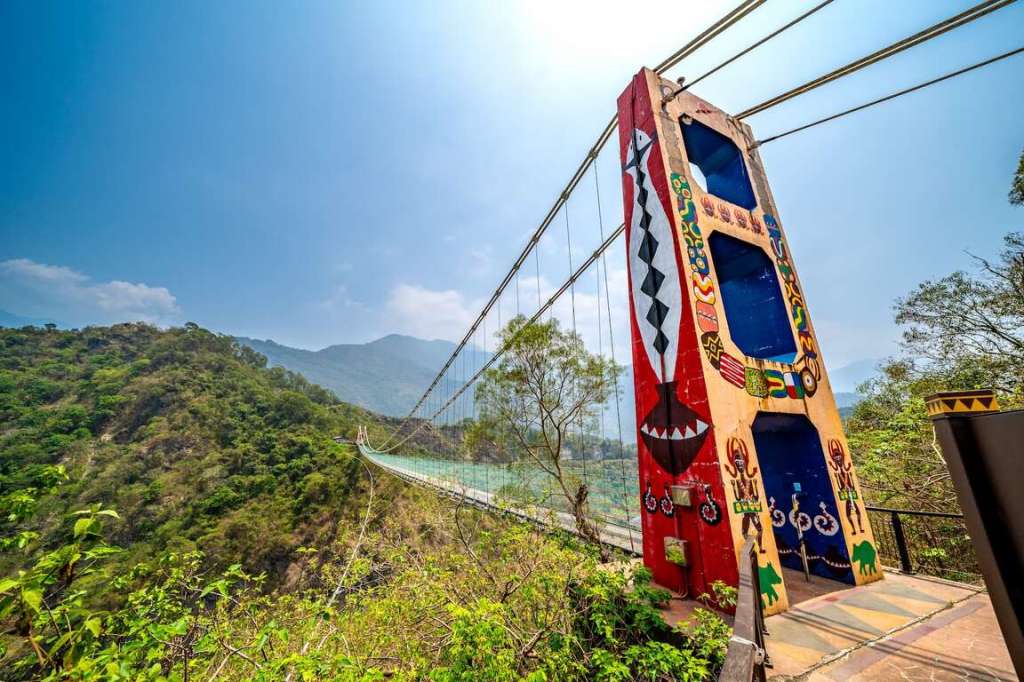
The bridge is decorated with Rukai totems & decorations.
It is said to be the tallest suspension bridge in Southeast Asia
( maolin-nsa.gov.tw )
- The Rukai Indigenous People of Taiwan – 魯 凱 族
- The Rukai People are one of Taiwan’s recognized Indigenous people groups, known for their strong social values, striking art & deep connection to the mountains of southern Taiwan. The Rukai are especially important in the region of Pingtung County.
- The current population of the Rukai People is approximately 13,000 people. They speak the Rukai Language, which is in the Austronesian family of languages, although there are several distinct dialects. The primary regions inhabited by the Rukai People on the Island of Taiwan are: (i.) Pingtung County (northern & mountainous areas); (ii.) Southern Kaohsiung; and (iii.) Parts of Taitung.
- The Rukai People traditionally live in high-altitude villages, which helped shape their values of discipline, mutual support & respect for hierarchy. The Rukai are notable for their aristocratic social system, which historically has included: (i.) Nobility; (ii.) Commoners; and (iii.) Former servant classes.
- Key values held by the Rukai People include: (i.) Honor and moral conduct; (ii.) Respect for elders; (iii.) Community responsibility; and (iv.) Personal integrity. Marriage, leadership & ceremonial roles were traditionally influenced by social status, although modern life has softened these distinctions.
- One of the most famous symbols of Rukai culture is the Clouded Leopard. The Clouded Leopard is traditionally regarded as a sacred animal associated with nobility and protection. Its image appears in carvings, textiles, and legends. Although the Clouded Leopard is now likely extinct in Taiwan, it remains a powerful cultural emblem for the Rukai.
- Traditional Rukai spirituality centers on: (i) Ancestor veneration (ii) Nature spirits (iii) Rituals connected to agriculture, hunting, and (iv) life transitions. Christianity (especially Presbyterian & Catholic traditions) became widespread during the 20th century, but many communities blend Christian practice with traditional customs.
- Historically, the economy & daily life of the Rukai People have centered on: (i) Slash-and-burn agriculture; (ii) Millet cultivation; and (iii) Hunting & foraging. In the present day, the focus of the Rukai people and culture is on: (i) Wage labor, farming, and tourism; and (ii) Cultural revitalization through festivals, language education, and heritage villages.
- In Pingtung County, Rukai villages are found in mountainous townships such as Wutai, which is widely regarded as a cultural heartland of the Rukai people. Wutai is known for: (i) Well-preserved traditions; (ii) Slate architecture; (iii) Public art inspired by Rukai mythology.
- There are three different theories regarding the origin of the term “Ngudradrekai” (abbreviated as Rukai) during historical migration. The origin of the term remains inconclusive. One theory suggests that Rukai is the self-designation of the Rukai people, meaning “people who live in the high mountains.” Another theory posits that Rukai is derived from a Paiwan word meaning “east,” “upstream,” or “deep mountain,” referring to the Rukai people’s settlement. A third theory suggests it comes from the Puyuma word Rukai, referring to settlements located near the foot of the mountains.
- There are three Rukai myths about human creation: (i) one, passed down by the eastern Rukai groups, claims that their ancestors landed on the east coast from overseas and settled on the east and west sides of the Central Mountain Range; (ii) another theory, prevalent among the western Rukai groups, believes their ancestors were created from the sun, pottery, or stones; and (iii) the third theory comes from the oral history of the three communities in Maolin (Kaohsiung County) which states that their ancestors originated in the Da Gui Hu and Xiao Gui Hu areas of Maolin District. Rukai tribes are distributed along the southern section of the Central Mountain Range, belonging to the administrative districts of Kaohsiung, Pingtung, and Taitung counties.
- Based on their living environment and cultural identity, the Rukai are divided into three groups: East Rukai, West Rukai, and Lower Three Villages. These three groups exhibit varying degrees of differences in language, social systems, and cultural representations, with the Lower Three Villages showing the greatest differences from the East and West Rukai groups. Even the vocabulary and intonation of their languages differ significantly.
- taiwantoday.tw – Rukai tribesman sculpts ancestral figures @ Taiwan Review e-zine
- knowlegde.gov.taipei – Taiwan Indigenous Peoples @ Taipei City Government Indigenous Peoples Affairs Commission website
- youtube.com – Tracing the Origins and Inheritance of News of Great Love — The Beautiful Legend of the Rukai People: Respecting and Cherishing Nature @ Youtube . com
- youtube.com – The Only Traditional East Rukai Settlement in Taitung: Taromak @ Youtube . com
- youtube.com – A Deep Dive into Taiwan’s Indigenous Peoples Culture: The Breathtaking Cultural Heritage of the Rukai Tribe @ Youtube . com
- youtube.com – Wutai Township & the Rukai Tribe – a colorful and tranquil hidden gem @ Youtube . com
- wikipedia.org – The Rukai People (魯凱族) @ Wikipedia . org
- wikipedia.org – Wutai Township (霧臺鄉) , Pingtung County, Taiwan @ Wikipedia . org
- tcmb.culture.tw – The culture of the Rukai People @ Taiwan Cultural Memory Bank (National Musem of Taiwan History)
- getmetotaiwan.com – The rich ecological knowledge of the Rukai Tribe of Wutai Township @ Get Me to Taiwan blog
- https://ab.hl.gov.tw/en-us/Explore/Ethnic_GroupIntro?utm_source=chatgpt.com
- https://www.taiwan-panorama.com/en/Articles/Details?CatId=11&Guid=02401bbc-9052-476d-9018-172e811ef8cc&postname=Indigenous+Craft+Revival%3A-Atayal+and+Rukai+Weavers&srsltid=AfmBOoqSNhy1-u_LsMUaXbM1BcQlW4KMfrjeJTRhz-b_M1mNwVcb_nnD&utm_source=chatgpt.com
- https://www.moc.gov.tw/en/News_Content2.aspx?n=505&s=18390&utm_source=chatgpt.com
- https://www.voanews.com/a/taiwan_struggles_to_save_indigenious_languages/1491428.html?utm_source=chatgpt.com
- https://formosatribal.com/indigenous-groups-in-taiwan/rukai/?utm_source=chatgpt.com
- https://wtfna.org/%E9%97%9C%E6%96%BC%E5%8F%B0%E7%81%A3%E5%8E%9F%E4%BD%8F%E6%B0%91-16-tribes-in-taiwan/?utm_source=chatgpt.com
- https://taiwaneverything.cc/2023/04/06/pingtung-indigenous-villages/?utm_source=chatgpt.com
- https://www.ocac.gov.tw/OCAC/Eng/Pages/Detail.aspx?nodeid=329&pid=71549107
- https://journals.sagepub.com/doi/10.1177/1086296X211030470?utm_source=chatgpt.com
- https://www.taiwantoday.tw/print/Politics/Top-News/113474/Rukai-indigenous-group-sets-up-tribal-assembly?utm_source=chatgpt.com
- https://robert02042003.pixnet.net/blog/posts/5069856104
- https://geo.center/rich-traditions-and-culture-of-the-paiwan-and-rukai-tribes-in-taiwan/?utm_source=chatgpt.com
- https://www.moc.gov.tw/en/News_Content2.aspx?n=468&s=16573&utm_source=chatgpt.com
- https://aborgpedia.alcd.center/detail?cat=32&id=11701&race=0&search=&writer=&utm_source=chatgpt.com
- https://icmagazine.org/indigenous-peoples/Rukai/?utm_source=chatgpt.com
- https://www.omniglot.com/writing/rukai.htm?utm_source=chatgpt.com
- https://joshuaproject.net/people_groups/11619/TW
- https://www.cip.gov.tw/zh-tw/index.html
- https://en.tacp.gov.tw/Indigenous/ItemDetail?ID=e441347f-883b-4333-b0ec-7b56fd775305&utm_source=chatgpt.com
- https://en.wikipedia.org/wiki/Wutai%2C_Pingtung?utm_source=chatgpt.com
- https://issuu.com
- http://article.sapub.org
- https://www.moc.gov.tw
- EASY SEARCH FOR MORE LINKS ! . . . . .
- scholar.google.com – The Rukai People – 魯凱族 @ Google Scholar
- youtube.com – The Rukai People – 魯凱族 @ You Tube . com
- images.google.com – The Rukai People – 魯凱族 @ Google Images
THE RUKAI LANGUAGE – 魯 凱 語
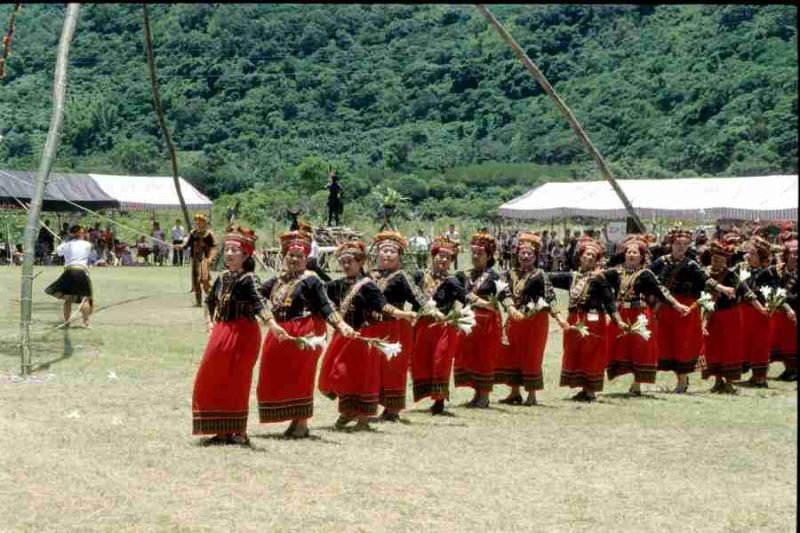
- The Language of the Rukai People of Taiwan – 魯 凱 語
- The Rukai Language (also known as Drekay) is a branch of the Austronesian language family spoken by about 10,000–13,000 members of the Rukai Pndigenous People in southern Taiwan. The language consists of six distinct dialects: Budai, Labuan, Maga, Mantauran, Tanan, and Tona. Drekay is spoken in Pingtung, Kaohsiung & Taitung counties in southern Taiwan. Rukai is considered endangered but remains in use as a first language by people of all ages in their communities, with some elderly speakers being monolingual. Rukai has been classified as one of the most divergent branches of the Austronesian language family in Taiwan, often standing apart from other Formosan groups.
- https://www.omniglot.com
- https://anthrosource.onlinelibrary.wiley.com
- https://digitalcommons.lib.uconn.edu
- EASY SEARCH FOR MORE LINKS ! . . . . .
- scholar.google.com – The Language of the Rukai People of Taiwan – 魯凱語 @ Google Scholar
- youtube.com – The Language of the Rukai People of Taiwan – 魯凱語 @ You Tube . com
- images.google.com – The Language of the Rukai People of Taiwan – 魯凱語 @ Google Images
* * * * *
Click here to return to the CloudBridge Home Page
for Indigenous Peoples of Taiwan
Click here to return to the CloudBridge Home Page
for Language & Peoples of Taiwan
NOTE : This site contains links to our ”favorite” and “most useful” websites . . . but the CloudBridge Project does not endorse or guarantee any of the products or services available through the links on the pages of this website.
本站包含了我們的 “最愛” 以及 “最有用” 的網站連結,但雲橋語文計劃並不保證其連結的有效性或對其背書.
Welcome to send us an email with your thoughts or comments:
欢迎用电子邮件的方式分享您的意见和建议:
Email: CloudBridgeTaiwan @ gmail . com
LATEST PAGE UPDATE: April 09, 2026
最後一次更新時間為: 2026 / 04 / 09
Copyright ©2021 CloudBridge Project. All rights reserved.
版權所有 ©2021 雲橋語文計劃. 保留所有權利.
 CloudBridgeTaiwan